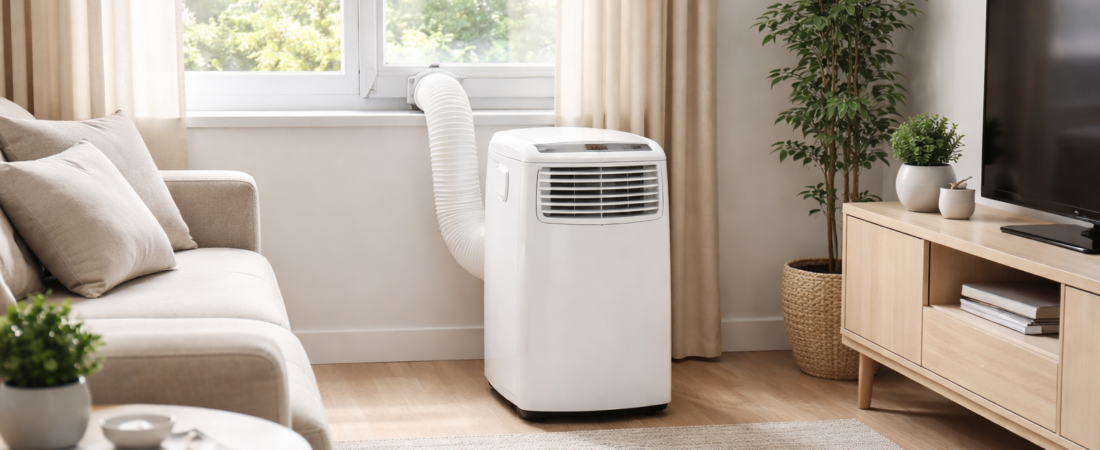
Portable air conditioners are often marketed as a universal cooling solution, but in practice, they work extremely well in some situations and poorly in others.
This guide explains who portable AC units genuinely benefit, who should avoid them, and why. The purpose is not to promote a product, but to help you determine whether this type of cooling realistically fits your space, constraints, and expectations.
Portable air conditioners are a middle option between basic fans (which just circulate air without cooling it) and permanent cooling systems like central air or mini-split systems (which are fixed, whole-home or multi-room air conditioners). Portable units are made for temporary, flexible cooling of a single room where permanent installation is not allowed or practical.
Who Portable Air Conditioners Work Best For
1. Apartment Renters With Window Unit Restrictions
Many apartment leases prohibit traditional window air conditioners due to exterior appearance requirements, water-damage concerns, or liability risks. In some buildings, HOAs or historic preservation rules also ban protrusions from windows.
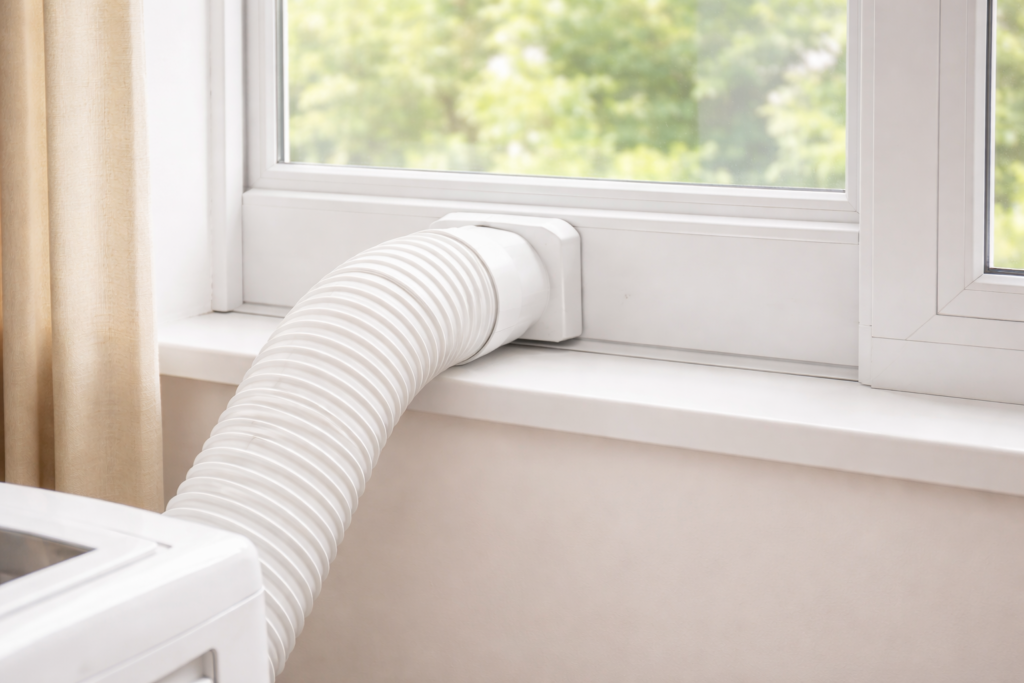
A portable air conditioner stays fully inside the apartment and vents hot air through a window using a removable installation kit. These kits usually require no drilling and leave no permanent marks when removed.
This setup works well for studio apartments and one-bedroom rentals under about 400 square feet with at least one operable window. If you are unsure how venting works or what limitations apply, this guide explains the requirements clearly:
https://smallroomaircoolers.com/can-a-portable-air-conditioner-be-used-without-a-window/
https://smallroomaircoolers.com/can-a-portable-air-conditioner-be-used-without-a-window/
Always review your lease carefully, as some properties restrict any form of window venting.
2. College Students Living in Dorms
Dormitories often ban window air conditioners but allow portable units because they do not extend outside the building. Their temporary installation aligns better with campus safety policies.
Dorm rooms typically range from 130 to 180 square feet, which falls within the effective cooling range of many portable air conditioners when sized correctly. Students can use the same unit year after year, even as housing changes.
Electrical load is the main concern. A shared electric circuit is the wiring that powers several plugs in a room. If too many high-power devices are used at once, the circuit breaker may trip (turn off power for safety), so check the dorm’s electrical rules before buying.
3. Remote Workers With Dedicated Home Offices
Running central air all day to cool an entire home when only one room is occupied is inefficient. Portable air conditioners allow spot cooling by focusing cooling on a single enclosed space.
This works especially well for converted garages, attic offices, or additions that receive poor airflow from the main HVAC system. Cooling a closed office between 150 and 300 square feet typically uses less energy than lowering the thermostat for the whole house.
Noise can matter during calls or focused work. Understanding typical sound levels helps set expectations:
https://smallroomaircoolers.com/how-loud-is-a-portable-air-conditioner-at-night-quiet-db-levels-explained/
https://smallroomaircoolers.com/how-loud-is-a-portable-air-conditioner-at-night-quiet-db-levels-explained/
4. RV and Van Dwellers Avoiding Permanent Modifications
Installing a rooftop or built-in air conditioner in an RV usually requires cutting into the structure, upgrading electrical systems, and committing to a permanent setup. Portable units offer a reversible alternative.
They can vent through existing windows or roof vents and be removed completely when selling or upgrading the vehicle. This flexibility is useful for people who move between RVs, vans, and apartments.
Portable air conditioners generally require shore power, which means plugging into an external electrical source (like at a campground or home). Most battery or solar setups cannot support continuous air conditioning without significant upgrades.
5. Tiny House Residents Testing Their Cooling Needs
Tiny houses often have limited space, unusual window layouts, or zoning restrictions that complicate the installation of permanent HVAC systems. Committing to a fixed system before understanding real-world cooling needs can be risky.
A portable air conditioner allows residents to test cooling performance over one or two seasons. Based on that experience, they can decide whether to invest in a mini-split, continue using the portable unit, or rely on fans and ventilation.
Very open layouts are less effective because cool air escapes quickly without containment.
6. Renters With Casement or Non-Standard Windows
Most window air conditioners are made for double-hung windows (windows with two panels that slide up and down). Casement windows (which swing open), sliding, or odd-shaped windows often make window units impractical or unsafe.
Portable air conditioners use narrower exhaust hoses and adaptable window kits that work with a wider range of window types. In some cases, custom panels can be used without altering the structure.
Check window size before purchasing, as very small windows may be limiting.
7. People Who Move Every One to Three Years
Frequent movers often avoid permanent cooling solutions that cannot travel with them. Window units are awkward to relocate, and central air upgrades usually benefit the property owner rather than the tenant.
Portable air conditioners pack up relatively quickly and can be reused across multiple homes. Over several moves, this often costs less than repeatedly buying window units.
Units should be transported upright (standing up as they are used) when possible, since the compressor inside can be damaged if the unit is tipped or laid down flat.
8. Households With Conflicting Temperature Preferences
In multi-person households, a single thermostat setting rarely suits everyone. A portable air conditioner allows one room to be cooled independently without forcing the entire home to match one person’s preference.
This can also help households with different schedules, such as day sleepers or shift workers.
Large temperature differences between rooms can feel uncomfortable, so moderate settings tend to work best.
9. Small Retail Shops and Home Studios
Leased retail spaces, workshops, or studios often lack built-in cooling, and installing permanent HVAC (Heating, Ventilation, and Air Conditioning) systems may not be allowed or affordable.
Portable air conditioners allow business owners to cool customer or work areas during operating hours without modifying the building. This approach works best for spaces under roughly 350 square feet with standard electrical outlets.
Because portable units are louder than central systems, they should be placed away from customer interaction areas.
When Portable Air Conditioners Are the Wrong Choice
10. Large Open Floor Plans Over 400 Square Feet
Portable air conditioners are designed for enclosed rooms. In large open-concept spaces, cool air disperses too quickly, and the unit may run constantly without achieving stable temperatures.
For these layouts, window units with higher capacity or central air systems perform more effectively.
11. Poorly Insulated Buildings in Extreme Heat
Buildings with single-pane windows, minimal insulation, or significant air leakage can heat up faster than portable units can cool them during severe heat waves.
Portable air conditioners may provide some relief, but they are better suited as supplemental cooling rather than a primary solution in these conditions.
12. Homes Requiring Simultaneous Multi-Room Cooling
Portable air conditioners are single-room solutions. Cooling multiple rooms simultaneously would require multiple units, increasing noise, power consumption, and cost.
When whole-home or multi-room cooling is required, central air or ductless mini-split systems usually provide better long-term value.
Best-Fit Scenario Based on Practical Constraints
Portable air conditioners offer the most value for renters or frequent movers who need temporary, flexible cooling in a single enclosed room and cannot install a permanent system.
They work best when correctly sized for the space. If sizing is unclear, this room-by-room guide explains how to match capacity to square footage:
https://smallroomaircoolers.com/how-many-btus-do-i-need-for-a-portable-air-conditioner-room-size-guide/
https://smallroomaircoolers.com/how-many-btus-do-i-need-for-a-portable-air-conditioner-room-size-guide/
For bedroom use, quieter and more compact models are often more appropriate:
https://smallroomaircoolers.com/best-portable-air-conditioners-for-bedrooms-quiet-compact-picks/
https://smallroomaircoolers.com/best-portable-air-conditioners-for-bedrooms-quiet-compact-picks/
Frequently Asked Questions
Can portable air conditioners cool as well as window units?
Portable air conditioners are usually less efficient than window units with the same BTU (British Thermal Unit, a measure of cooling power) rating, because some of the heat from the exhaust hose and the unit itself is recirculated back into the room. So, cooling generally takes longer and uses more energy. When chosen for the right room size and used in an enclosed space, they still cool effectively. The trade-off is between flexibility and ease of installation, and the highest energy efficiency.
Do portable air conditioners work in humid climates?
Yes, with limitations. Most models remove moisture as they cool, and some evaporate that condensation through the exhaust hose. Others collect water that must be emptied manually. If humidity is a concern, this guide explains what to expect:
https://smallroomaircoolers.com/do-portable-air-conditioners-work-in-high-humidity/
https://smallroomaircoolers.com/do-portable-air-conditioners-work-in-high-humidity/
How loud are portable air conditioners?
Most portable air conditioning units operate at 50-60 decibels (a unit used to measure sound levels), which is similar to the volume of a normal conversation. Because all components, such as the compressor and fan, are inside the room, they are louder than window units, which have some parts located outside. Placement strategies can reduce disruption during sleep: https://smallroomaircoolers.com/best-portable-air-conditioner-placement-for-quiet-sleep/
Can a portable air conditioner run without venting?
No. The unit must vent hot air outside. Without venting, heat is recycled into the room, and temperatures increase rather than decrease.
How much does it cost to run a portable AC daily?
A typical 10,000 BTU portable air conditioner draws about 1,000 watts. Running it for eight hours per day usually costs around $1.50 at average electricity rates, though costs vary by location and usage.
Do portable air conditioners require special outlets?
Most units under 14,000 BTU use standard household outlets. Larger units may require higher-voltage connections. Extension cords are not recommended due to sustained electrical load.
How long do portable air conditioners last?
With regular maintenance, portable air conditioners typically last between five and ten years. Usage intensity, operating conditions, and build quality all affect lifespan.