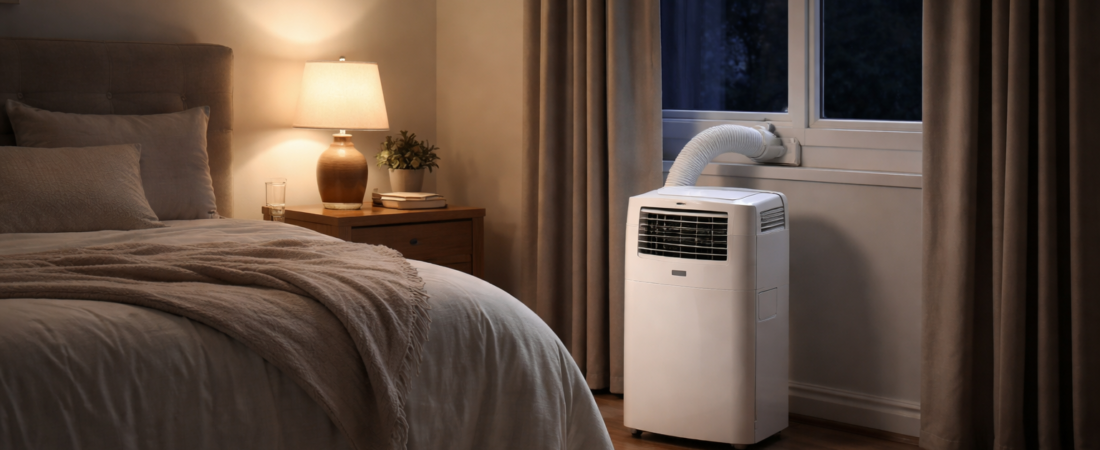
How Loud Is a Portable Air Conditioner at Night? (Quiet dB Levels Explained)
Most portable air conditioners produce between 48 and 60 decibels (dB) during operation. While that range isn’t extreme during the day, the same noise can feel much louder at night when background sounds fade — especially in bedrooms, dorm rooms, and studio apartments.
This guide explains how loud a portable air conditioner really is at night, what those decibel numbers mean in real life, why some units seem louder after dark, and how to choose a model that won’t disrupt your sleep.
Quick Answer: Are Portable Air Conditioners Loud at Night?
For most people, portable air conditioners are not too loud for sleeping — as long as the unit is properly sized and designed for bedroom use.
As a general reference:
-
Below 50 dB: very quiet, suitable for light sleepers
-
50–55 dB: acceptable for most people
-
Above 55 dB: can be disruptive at night, especially in small rooms
Noise perception depends on room size, unit placement, and how often the compressor cycles on and off.
What Do Decibel Ratings Actually Mean?

Decibels are not a linear scale. A small increase in dB can sound much louder than expected.
For comparison:
-
40 dB: quiet library
-
50 dB: soft conversation
-
60 dB: normal conversation
At night, when ambient noise drops, a 52 dB portable air conditioner can feel significantly louder than it does during the day.
Why Portable Air Conditioners Seem Louder at Night
Portable air conditioners don’t suddenly get louder after sunset, but several factors make the noise more noticeable.
Reduced Background Noise
During the day, traffic, electronics, and household activity mask mechanical noise. At night, those sounds disappear, leaving the AC as the dominant noise source.
Compressor Cycling
Most portable air conditioners use traditional compressors that turn fully on and off. These sudden changes in sound can wake light sleepers, even if the average noise level is reasonable.
Small Room Acoustics
Bedrooms and dorm rooms are often compact with hard surfaces that reflect sound, making noise feel more concentrated than in larger living spaces.
Higher Overnight Runtime
On hot nights, portable ACs may run longer at higher fan speeds, increasing perceived noise over time.
Is a Portable Air Conditioner Too Loud for Sleeping?
In most cases, no — as long as the unit matches the room size.
Oversized units cool rooms too quickly, cycle more aggressively, and often sound louder as a result. Choosing the correct capacity is critical, which is why understanding how many BTUs you need for a portable air conditioner helps reduce unnecessary nighttime noise.
Why Inverter Technology Matters at Night
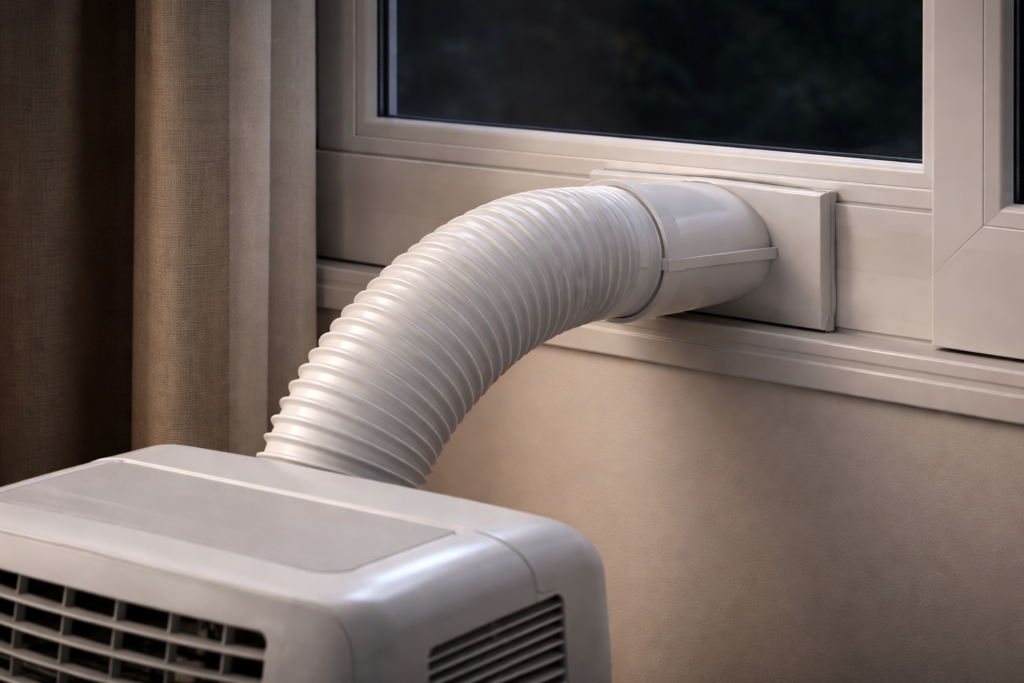
The biggest noise difference between portable air conditioners comes from how the compressor operates.
Traditional portable ACs:
-
Turn fully on and off
-
Create sudden noise spikes
-
Can wake light sleepers
Inverter-based portable ACs:
-
Run continuously at variable speeds
-
Avoid loud startup sounds
-
Maintain steadier temperatures
For people sensitive to nighttime noise, inverter technology can make a noticeable difference in sleep quality.
Does Room Size Affect Nighttime Noise?
Yes — significantly.
Smaller rooms amplify sound and make compressor cycling more noticeable. In many cases, a lower-capacity unit running steadily is quieter than a high-powered unit cycling aggressively.
If you’re cooling a bedroom or compact space, this guide to the best portable air conditioners for bedrooms explains which designs are better suited for overnight use.
For larger rooms, stepping up in BTU capacity is necessary, but careful placement and fan settings become more important. This is covered in the guide to the best portable air conditioners for 300–500 sq ft rooms.
How Placement Affects Perceived Noise
Where the unit sits in the room matters just as much as its decibel rating.
Noise can increase if:
-
The unit is placed directly beside the bed
-
The exhaust hose vibrates against walls or windows
-
The unit sits on an uneven or hollow floor
Proper setup can noticeably reduce nighttime noise, and this is explained step by step in the guide to portable air conditioner placement for quiet sleep.
Tips to Make a Portable Air Conditioner Quieter at Night
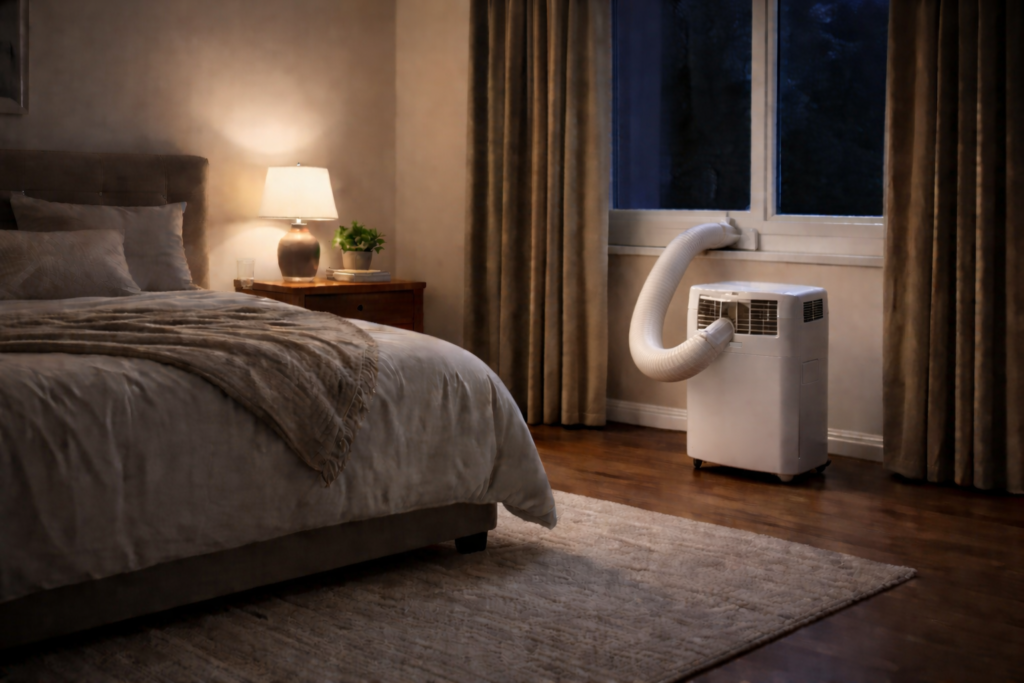
Even if you already own a unit, you can often reduce perceived noise with a few adjustments:
-
Use sleep or eco mode to limit fan speed
-
Set the thermostat to maintain temperature, not aggressively cool
-
Keep the exhaust hose as short and straight as possible
-
Seal window gaps to reduce workload
-
Place the unit away from corners and reflective surfaces
In humid climates, longer, steadier runtimes can actually reduce cycling noise. Understanding how portable air conditioners work in high humidity can help explain why some units sound different overnight.
Frequently Asked Questions
Are portable air conditioners louder than window units at night?
Often, yes. Portable ACs typically require higher BTU ratings and use exhaust hoses, which can increase noise compared to window units.
Is fan noise or compressor noise worse for sleeping?
Compressor cycling is usually more disruptive than steady fan noise.
Can white noise help?
Some people find steady fan noise tolerable or even helpful, while sudden compressor sounds are more likely to disturb sleep.
Final Verdict: Should You Use a Portable AC at Night?
Portable air conditioners are generally suitable for nighttime use when:
-
The unit is properly sized for the room
-
Noise levels stay below roughly 55 dB on low or sleep modes
-
Placement and setup are optimized
For light sleepers, inverter-based models and bedroom-focused designs offer the best experience. For most users, careful sizing and proper setup matter more than chasing the lowest advertised decibel number.