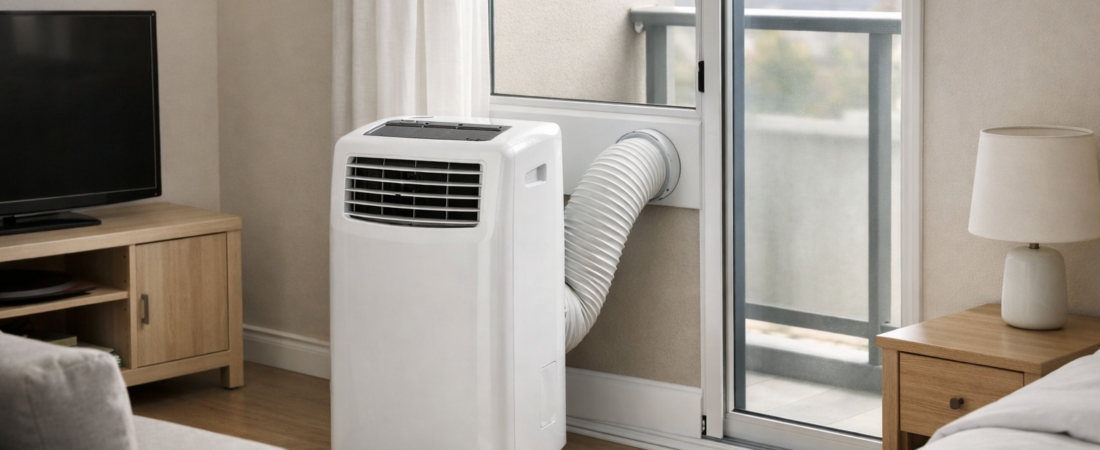
Portable air conditioners are often chosen for apartments, rentals, dorms, and rooms where permanent installation is not possible. One of the most common questions buyers ask is whether a portable air conditioner can be used without a window.
The short answer is yes, but only if the hot air can be vented outside through some other opening. Without proper venting, a portable air conditioner cannot cool a room effectively and may actually make the space warmer.
This guide explains how portable air conditioners work, why venting is essential, which windowless setups can work, what limitations to expect, and how to avoid common problems before buying.
How Portable Air Conditioners Work
Unlike fans or evaporative coolers, portable air conditioners actively remove heat from the air. A typical unit pulls warm indoor air into the system, cools it using refrigerant, and then exhausts the captured heat outside through a vent hose.
That final step is critical. If the hot air cannot escape the room, it circulates back in, canceling out the cooling effect. In some cases, the room temperature can actually increase because the compressor itself generates heat.
Even with proper venting, performance depends on using the correct unit size for the space. If the air conditioner is undersized, it will struggle regardless of how well it is vented. This room-size guide explains how to match BTUs to your space:
https://smallroomaircoolers.com/how-many-btus-do-i-need-for-a-portable-air-conditioner-room-size-guide/
https://smallroomaircoolers.com/how-many-btus-do-i-need-for-a-portable-air-conditioner-room-size-guide/
Can a Portable AC Work Without a Window?
A portable air conditioner doesn’t specifically need a window, just a way to move hot air outside the building. Without an exit for heat, it cannot function.
Rooms without standard windows can still work if they have alternative venting options that lead directly outdoors. The key requirement is that the hot exhaust air leaves the building envelope entirely.
For renters who need cooling without drilling holes or making permanent modifications, choosing the right setup is essential, which is why many turn to best portable air conditioners for renters (no drilling, no damage) as a practical solution.
Alternative Venting Options for Windowless Rooms
Several alternatives can work in place of a traditional window, as long as the venting path leads outdoors and is reasonably sealed.
Sliding glass doors are one of the most common solutions. Vertical panels can be used to adapt standard window kits to fit the door opening, allowing the exhaust hose to vent outside while minimizing air leaks.
Wall vents or exterior wall openings are another effective option when allowed. A small circular vent hole fitted with a proper sleeve provides direct exhaust and often results in better performance than window kits. Renters should always confirm what modifications are permitted before proceeding.
Ceiling or drop-ceiling venting can work in interior rooms if the duct leads to an attic or exterior exhaust point. Care must be taken to prevent hot air from recirculating back into the room, and insulated ducting is strongly recommended.
Unused dryer or utility vents can sometimes be adapted, but only if they vent directly outdoors and the air conditioner manufacturer permits such a connection.
Portable or temporary vent kits are also available for doors, panels, or custom openings. These allow venting without permanent modifications, though sealing quality varies by setup.
For renters and small apartments where flexibility matters most, this overview of portable air conditioners for small spaces explains where these setups tend to work best:
https://smallroomaircoolers.com/portable-air-conditioners-for-small-spaces/
https://smallroomaircoolers.com/portable-air-conditioners-for-small-spaces/
Why Proper Venting Is Essential

Running a portable air conditioner without venting leads to predictable problems. Instead of cooling the room, the unit exhausts heat back into the same space. This raises the room temperature, increases the humidity, and forces the compressor to run continuously.
Poor venting also increases energy use and can cause the unit to shut down due to overheating. Venting is not optional or a performance upgrade; it is a fundamental requirement for how portable air conditioners operate.
Common Problems With Windowless Portable AC Installations
Even with alternative venting, cooling issues can still occur. The most common causes include vent hoses that are too long or sharply bent, poorly sealed vent openings that allow hot air to leak back in, rooms that exceed the unit’s intended size, and single-hose units used in spaces that create strong negative pressure.
Simple fixes such as shortening the hose, sealing gaps with weatherstripping, and confirming the room dimensions often improve performance. In bedrooms, placement also matters for both airflow and noise control:
https://smallroomaircoolers.com/best-portable-air-conditioner-placement-for-quiet-sleep/
https://smallroomaircoolers.com/best-portable-air-conditioner-placement-for-quiet-sleep/
Situations Where a Portable AC Will Not Work Without a Window
Some spaces are simply unsuitable for portable air conditioners, even with creative venting.
Large open floor plans and loft-style layouts allow cool air to disperse too quickly. Rooms with no exterior walls offer no practical way to vent heat outdoors. Apartments that prohibit any venting or modifications leave no workable solution.
In these cases, alternatives such as ductless mini-split systems, building-provided HVAC, or high-performance fans may be more appropriate.
Single-Hose vs Dual-Hose Units in Windowless Setups
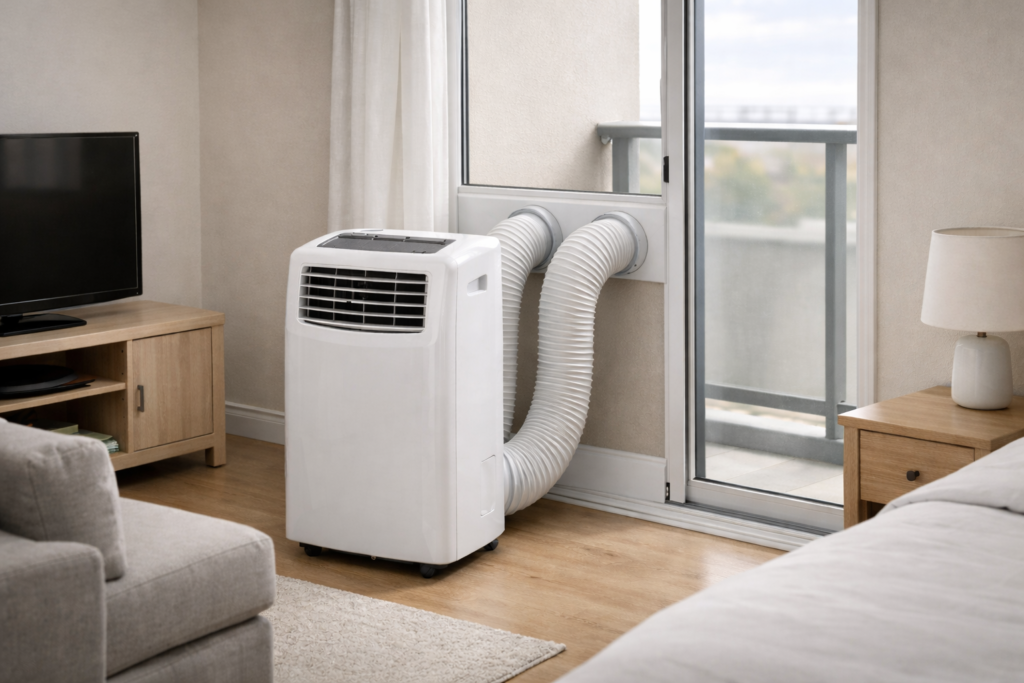
The type of portable air conditioner matters more in windowless or alternative venting situations.
Single-hose units pull air from the room to cool the compressor and exhaust it outside. This creates negative pressure, which can draw warm air back into the room through cracks or gaps.
Dual-hose units use one hose to pull air from outside and another to exhaust hot air. This maintains neutral pressure and generally improves efficiency, especially in rooms with imperfect sealing.
For windowless rooms or non-standard venting, dual-hose units tend to perform more consistently, though they still require a proper exhaust path.
The Myth of Ventless Portable Air Conditioners
True ventless portable air conditioners do not exist. Products marketed as ventless are typically evaporative coolers or enhanced fans that use water to create a cooling sensation.
These devices do not remove heat from the air and are ineffective in humid climates. A real air conditioner must exhaust heat somewhere, which is why venting is always required.
Noise and Efficiency Considerations
Alternative venting can affect both noise levels and efficiency. Poorly sealed vents cause longer run times, which increases noise and energy use.
Because all components are inside the room, portable air conditioners are louder than window units. Understanding typical sound levels helps set expectations, especially for overnight use:
https://smallroomaircoolers.com/how-loud-is-a-portable-air-conditioner-at-night-quiet-db-levels-explained/
https://smallroomaircoolers.com/how-loud-is-a-portable-air-conditioner-at-night-quiet-db-levels-explained/
For bedrooms specifically, some models and configurations are better suited than others:
https://smallroomaircoolers.com/best-portable-air-conditioners-for-bedrooms-quiet-compact-picks/
https://smallroomaircoolers.com/best-portable-air-conditioners-for-bedrooms-quiet-compact-picks/
Frequently Asked Questions
Can I vent a portable air conditioner into another room?
Technically, yes, but it is rarely effective. The heat simply transfers to the adjacent room and often returns, reducing overall cooling.
Do all portable air conditioners require venting?
Yes. Any true air conditioner must exhaust heat outside. Devices that do not vent heat are not air conditioners.
Are dual-hose units better for windowless rooms?
In most cases, yes. Dual-hose units maintain neutral air pressure and reduce heat re-entry, making them better suited for alternative venting setups.
Conclusion
A portable air conditioner can be used without a window, but only if hot air is vented outside through another opening. Windows are simply one of several venting options, not a requirement on their own.
When alternative venting is properly planned and sealed, portable air conditioners can effectively cool windowless rooms. When venting is not possible, these units will not perform as intended. Understanding these limits helps ensure you choose the right cooling solution for your space and avoid unnecessary frustration.