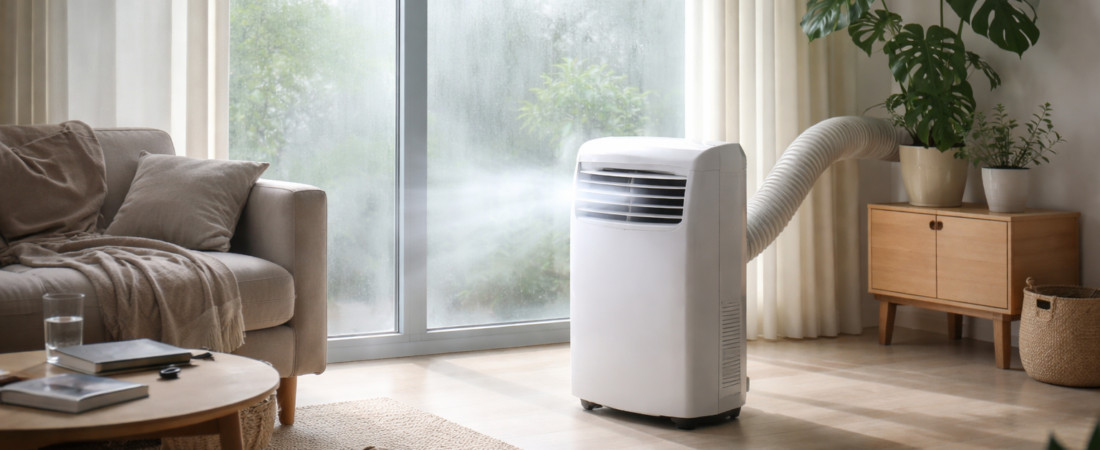
If you’ve ever stepped into a room that isn’t especially hot but still feels sticky, heavy, and uncomfortable, you’ve experienced how humidity changes everything. In humid environments, temperature alone doesn’t tell the whole story — moisture in the air can make even moderate heat feel oppressive.
That leads to a very common and reasonable question: do portable air conditioners work in high humidity, or are they just moving warm, damp air around?
The short answer is yes, portable air conditioners can help in humid conditions — but how well they work depends on room size, unit capacity, and realistic expectations.
Why High Humidity Feels Worse Than Heat
Humidity affects how your body cools itself. Normally, sweat evaporates from your skin and carries heat away. When the air is already saturated with moisture, evaporation slows down, making you feel warmer than the thermometer suggests.
This is why:
- A fan often feels useless in humid conditions
- Rooms can feel uncomfortable even at lower temperatures
- Cooling feels inconsistent without moisture control
Reducing humidity doesn’t just make a room cooler — it makes it feel cooler, which is why dehumidification matters so much.
High humidity doesn’t just affect comfort — it also impacts how effectively a portable air conditioner can cool a room.
Do Portable Air Conditioners Remove Humidity?
Yes — portable air conditioners do remove humidity, but it’s important to understand how and to what extent.
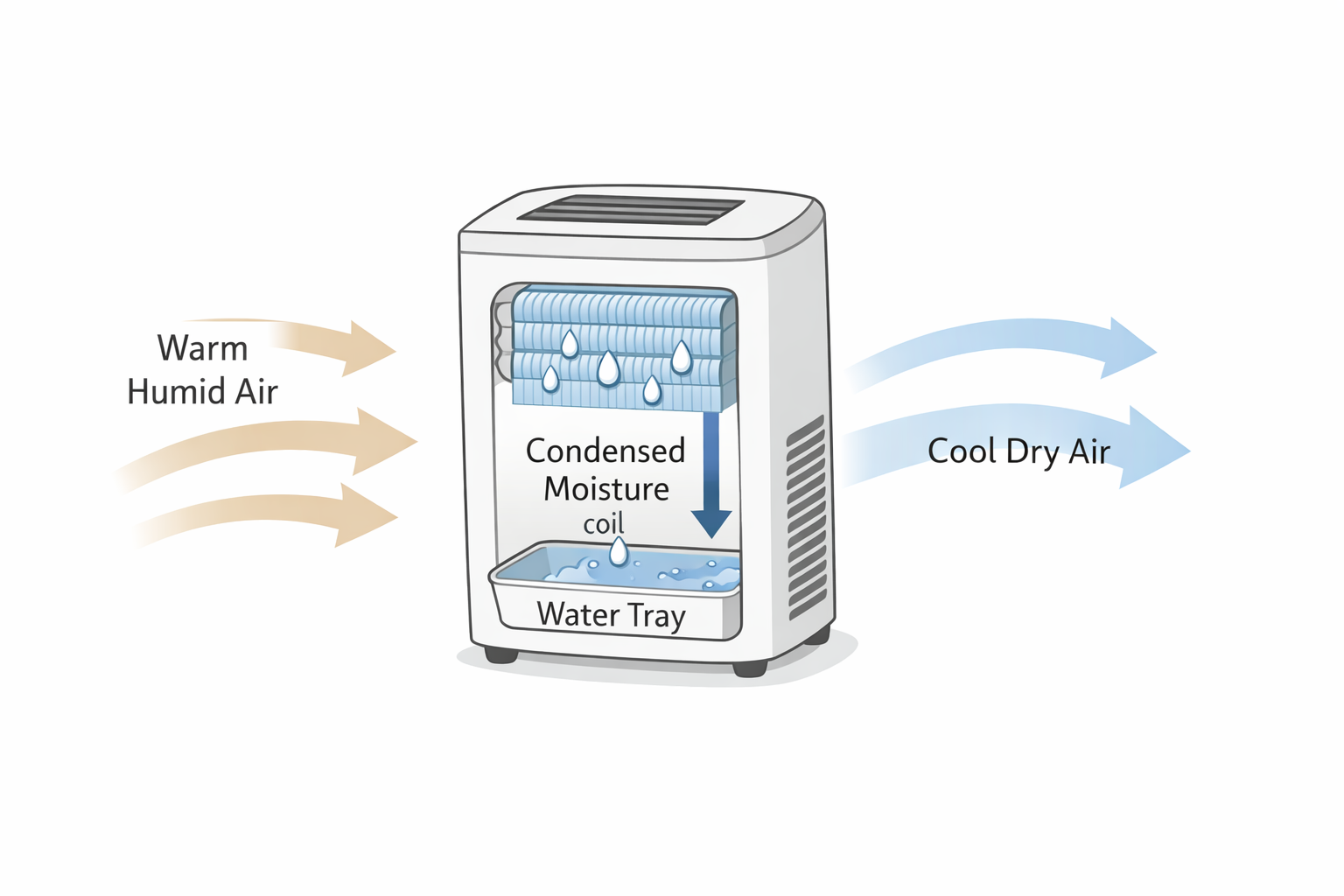
Portable ACs dehumidify as a byproduct of cooling. As warm, moist air passes over the unit’s cold evaporator coils, moisture condenses and is removed from the air. This process lowers humidity levels while the unit cools the room.
However, portable ACs are not dedicated dehumidifiers. That means:
- They work best in small to medium rooms
- Their moisture removal is tied to how often the compressor runs
- Extremely humid spaces may still feel damp if the unit is undersized
In most apartments, bedrooms, and home offices, this built-in dehumidification is usually enough to noticeably improve comfort.
How Room Size and BTUs Affect Humidity Control
Humidity control is closely tied to proper sizing.
If a portable air conditioner is too small for the room:
- It runs constantly without fully cooling
- Moisture removal is inefficient
- The space may feel clammy even if the temperature drops slightly
If it’s too large:
- It cools the room too quickly
- The compressor shuts off before enough moisture is removed
- Humidity lingers despite cold air
This is why understanding how many BTUs you need for a portable air conditioner is especially important in humid environments. Correct sizing allows the unit to run long enough to remove moisture while maintaining a stable temperature.
Single-Hose vs Dual-Hose Units in Humid Climates
Hose design plays a role in how portable ACs perform in humidity.
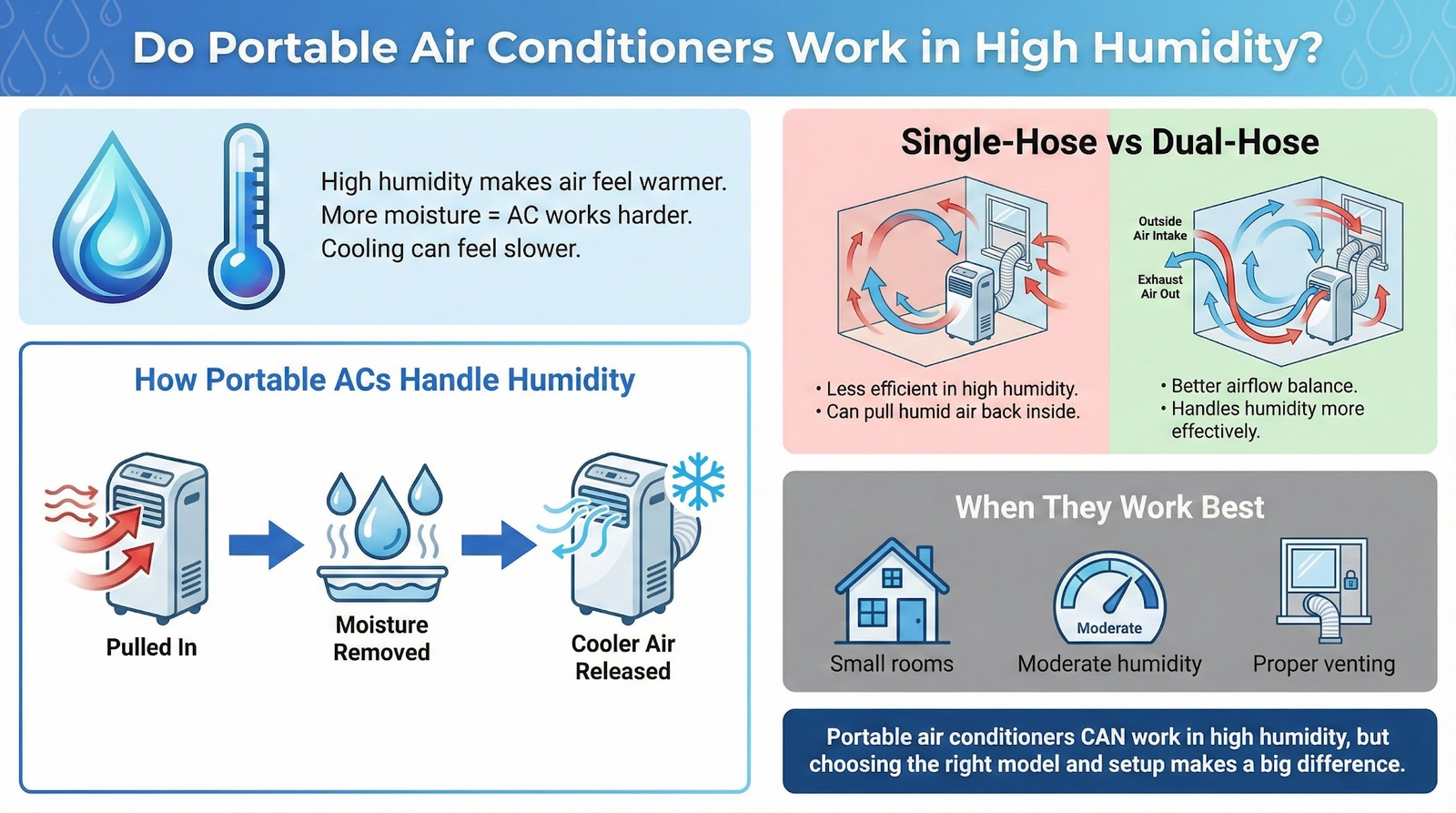
Single-hose units:
- Pull air from inside the room
- Exhaust hot air outside
- Can create slight negative pressure
- May draw humid air back into the space from cracks or adjacent rooms
Dual-hose units:
- Use one hose to pull air from outside
- Use another to exhaust hot air
- Reduce negative pressure
- Often perform better in humid conditions
That said, single-hose models can still work well in humid apartments if:
- The room is properly sealed
- The unit is correctly sized
- Expectations are realistic
For many renters, the convenience of a single-hose unit outweighs the efficiency trade-off.
Factors like ventilation, room size, and noise levels all play a role in how effective a portable air conditioner feels in real-world conditions.
When a Portable AC Is Enough (And When It’s Not)
Portable air conditioners tend to work well in humidity when used in:
- Bedrooms
- Small apartments
- Home offices
- Dorm rooms
They’re especially effective for overnight comfort, where removing moisture can make sleep noticeably better even without dramatic temperature drops.
They may struggle in:
- Very large open-plan spaces
- Poorly sealed rooms
- Extremely humid climates without additional ventilation
In those cases, pairing a portable AC with a small standalone dehumidifier can help — but for most renters, that’s unnecessary.
Because many cooling alternatives rely on airflow or evaporation rather than heat removal, apartment dwellers often compare them directly, which is explained in this guide to portable air conditioner alternatives for small apartments.
A Practical Option for Small, Humid Rooms
In smaller humid spaces, choosing a compact, appropriately sized unit often delivers the best balance of cooling and moisture control.
An 8,000 BTU portable air conditioner designed for small rooms is typically sufficient for bedrooms and apartments where humidity is noticeable but not extreme. Models in this range are easier to manage, less likely to short-cycle, and tend to provide steadier dehumidification during normal use.
The key is matching capacity to the space rather than chasing the highest BTU number available.
Humidity is just one factor to consider — noise levels and ventilation setup can also affect whether a portable air conditioner is a good fit for your space.
The Bottom Line
Portable air conditioners do work in high humidity, but they work best when:
- The unit is correctly sized
- The room isn’t oversized
- Expectations are realistic
They won’t replace a dedicated dehumidifier in extreme conditions, but for most apartments, bedrooms, and home offices, a well-matched portable AC can significantly improve comfort by lowering both temperature and humidity.
If your space feels sticky rather than hot, the right portable air conditioner may be exactly what you need — not just to cool the air, but to make it livable again.