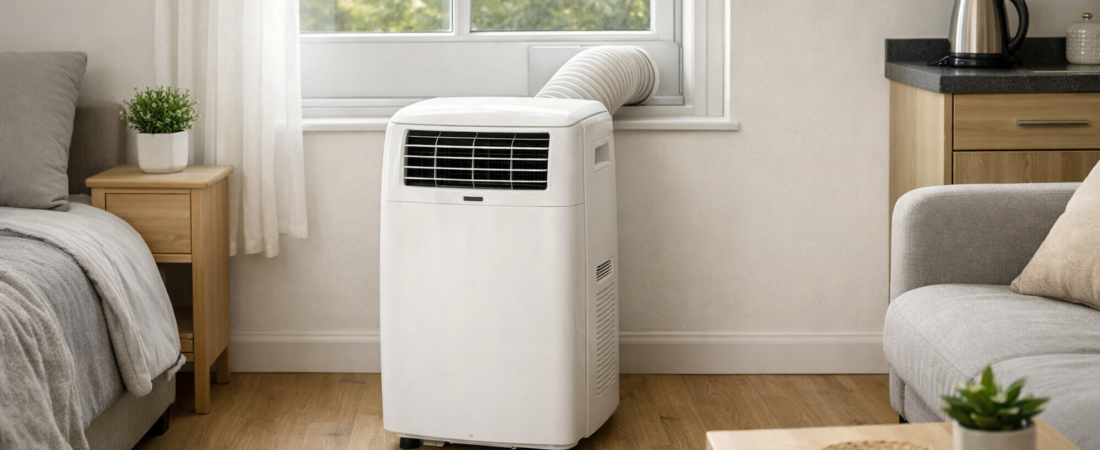
Cooling a small space sounds simple, but it’s often harder than cooling a large one. Apartments, dorm rooms, studios, and compact home offices usually have limited floor space, rental restrictions, and noise concerns that make traditional air conditioning impractical.
Portable air conditioners are designed to solve these problems — but only if you choose the right type and size.
This guide explains which portable air conditioners actually work well in small spaces, what to avoid, and how to choose a unit that cools effectively without overwhelming your room.
Quick Answer: What Works Best in Small Spaces
The best portable air conditioners for small spaces are models that:
Are correctly sized for the room (usually 8,000–10,000 BTU)
Have a compact footprint
Operate at manageable noise levels
Install without permanent modifications
Studio apartments present unique challenges compared to other small rooms, particularly when it comes to noise and placement. This is explored in Best Portable Air Conditioners for Studio Apartments.
Oversized units often cool poorly, cycle aggressively, and feel louder in small rooms. Right-sizing matters more than raw power.
If you’d like to compare compact, small-space-friendly models directly, you can jump to the recommended picks later in this guide.
In very small apartments, people often explore fans or air coolers first, but many discover their limitations quickly. Portable Air Conditioner Alternatives for Small Apartments explains how these options compare and where they fall short.
What Counts as a Small Space?
For portable air conditioning, small spaces typically include:
Bedrooms under 300 sq ft
Dorm rooms
Studio apartments
Small living rooms
Home offices
Converted garages or spare rooms
Renters often face additional constraints around installation and property damage, so understanding which models work well without permanent changes is covered in Best Portable Air Conditioners for Renters (No Drilling, No Damage).
These spaces usually share three constraints: limited airflow, limited floor space, and limited installation options.
For very small bedrooms and dorm rooms, see the SereneLife SLPAC8 Portable Air Conditioner Review for a closer look at compact cooling performance.
Why Portable ACs Make Sense for Apartments and Dorms
Portable air conditioners are popular in rentals because they:
Don’t require permanent installation
Use window kits instead of wall modifications
Can be removed when you move
Don’t violate most lease agreements
For renters who can’t make permanent changes, choosing a renter-friendly portable air conditioner is especially important.
If you’re unsure whether a window is required, Can a Portable Air Conditioner Be Used Without a Window? explains how venting works and what alternatives exist.
For a deeper explanation of how cooling capacity ratings differ, Portable Air Conditioner Cooling Capacity Explained (ASHRAE vs DOE) clarifies how portable AC sizing is measured.
Choosing the Right Size Portable AC for a Small Room
In very compact rooms, smaller units often perform better than large portable air conditioners that can feel oversized for the space. For example, Shinco 8,000 BTU units are commonly used in compact rooms where larger models would cycle too aggressively.
BTU Matters More Than Brand
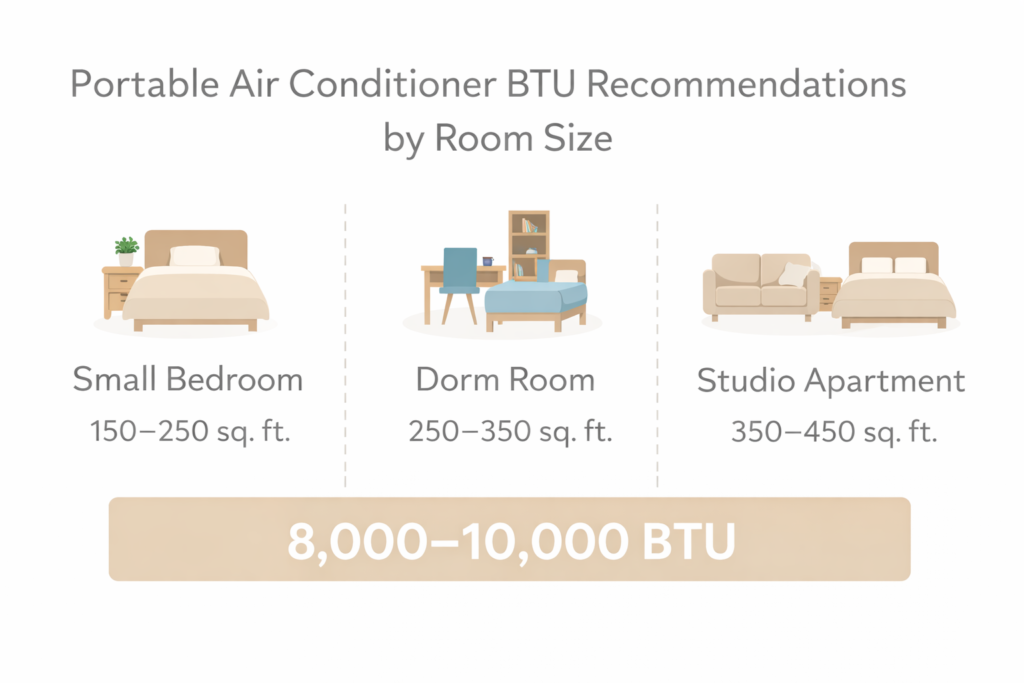
For small spaces, these cooling ranges typically work best:
Up to 250 sq ft → 8,000 BTU
250–350 sq ft → 8,000–10,000 BTU
350–450 sq ft → around 10,000 BTU
Bigger is not always better. An oversized unit can cool the room too quickly, shut off frequently, and often feel louder or less comfortable as the compressor cycles.
If you’re unsure how to match cooling power to your room size, How Many BTUs Do I Need for a Portable Air Conditioner? explains how portable AC sizing works.
Noise Levels in Small Rooms
Noise is often more noticeable in smaller rooms because there is less space for sound to dissipate.
Portable air conditioners typically operate between about 50 and 65 dB depending on fan speed and compressor load. In compact spaces, even moderate noise can feel intrusive.
For comparison:
Quiet library → around 40 dB
Normal conversation → around 60 dB
If quiet operation matters — especially for sleeping or working — How Loud Is a Portable Air Conditioner at Night? explains what noise levels are realistic and what to expect from different models.
Best Portable AC Types for Small Spaces
Single-Hose Portable Air Conditioners
Most people cooling smaller rooms choose single-hose portable air conditioners because they:
Take up less floor space
Are easier to install
Cost less than dual-hose units
They are not the most efficient design, but for apartments, dorm rooms, and compact living spaces the convenience usually outweighs the efficiency difference.
For a closer look at how a compact mid-range unit performs in small rooms, see the Whynter ARC-101CW Portable Air Conditioner Review.
Dual-Hose Units (When They Make Sense)
Dual-hose portable air conditioners can be more efficient because they separate intake and exhaust airflow.
However, they are typically:
Larger
More expensive
Sometimes louder due to increased airflow
For very small rooms, they are often unnecessary and may take up more floor space than most apartments, dorm rooms, or compact bedrooms can comfortably accommodate.
Portable air conditioners vary widely in size, noise level, and cooling performance, but a few models consistently work well in smaller rooms where space, noise, and installation flexibility all matter.
Recommended Portable Air Conditioners for Small Spaces
BLACK+DECKER BPACT08WT (8,000 BTU)
Best for very small rooms and bedrooms under about 250 sq ft where compact size matters most.
This model is well suited to bedrooms, dorm rooms, and compact apartments where space and noise control matter more than rapid cooling.
More details are available in the BLACK+DECKER BPACT08WT 8,000 BTU Portable Air Conditioner Review.
BLACK+DECKER BPACT10WT (10,000 BTU)
Best for slightly larger bedrooms or studio apartments up to about 350 sq ft.
For slightly larger rooms or open-plan spaces, this unit provides more cooling capacity while remaining manageable in size.
A full breakdown is available in the BLACK+DECKER BPACT10WT Portable Air Conditioner Review.
If you’re comparing BLACK+DECKER models directly, see the BLACK+DECKER BPACT Series Comparison for a side-by-side overview.
TOSOT 8,000 BTU Portable Air Conditioner
Best for quiet cooling in small bedrooms and apartments.
This model is often chosen for its relatively quieter operation and suitability for smaller rooms.
Noise levels, cooling behaviour, and room-size fit are covered in the TOSOT 8,000 BTU Portable Air Conditioner Review.
Check Current Pricing
BLACK+DECKER BPACT08WT — View on Amazon
BLACK+DECKER BPACT10WT — View on Amazon
TOSOT 8,000 BTU — View on Amazon
Whynter ARC-101CW — View on Amazon
Prices and availability vary seasonally.
Other Compact Portable ACs Worth Considering
Whynter ARC-101CW 10,000 BTU Portable Air Conditioner
The Whynter ARC-101CW Portable Air Conditioner is a 10,000 BTU unit suited for small bedrooms, apartments, and dorm rooms that need slightly more cooling capacity without moving to a large portable AC.
Whynter models are generally known for steady cooling performance and relatively efficient operation in compact spaces, which makes this unit a practical option for readers who want a slightly stronger model while still maintaining a manageable footprint.
For a full evaluation of performance, noise levels, and room-size suitability, see the Whynter ARC-101CW Portable Air Conditioner Review.
Installation Considerations in Small Spaces
Before choosing a portable air conditioner, it helps to check a few practical installation details:
Window type and size
Floor space near the window
Clearance for airflow
Access to a nearby power outlet
Most portable air conditioners install in about 15–20 minutes using a window vent kit and exhaust hose, and many setups require little or no tools. However, cramped layouts can make placement more challenging.
In compact rooms where floor space is limited, smaller units such as Midea 8,000 BTU portable air conditioners can sometimes be easier to position than higher-capacity models designed for larger rooms.
Energy Use in Small Rooms
Smaller rooms usually cool faster, which can reduce how long a portable air conditioner needs to run.
However, factors such as poor insulation, direct sunlight, or heat from electronics can increase the cooling load and cause the unit to run more frequently.
Portable air conditioners are generally less efficient than window air conditioners, but in apartments, dorms, and rentals where window units are not allowed, the flexibility of a portable unit often outweighs the efficiency difference.
Who Portable ACs for Small Spaces Work Best For
Portable air conditioners are a good fit if you:
Rent an apartment or dorm room
Cannot install a window AC unit
Need cooling that can move with you
Want targeted cooling for a single room
For rooms at the smaller end of the scale, Best 8,000 BTU Portable Air Conditioners for Small Rooms compares models that balance compact size, quiet operation, and renter-friendly installation.
They may be less suitable if you:
Need very quiet or near-silent operation
Want to cool multiple rooms at once
Have access to permanent HVAC systems
If you’re unsure whether portable AC is the right solution, 12 Types of People Who Actually Benefit from Portable AC Units explains where these units make sense — and where they may not.
Final Thoughts
Portable air conditioners can be an effective solution for small spaces when they are properly sized and matched to the room.
The key is resisting the temptation to oversize. In apartments, dorm rooms, and compact living spaces, a right-sized unit usually delivers better comfort, lower noise, and easier installation.
For readers comparing different room types, you may also want to explore Best Portable Air Conditioners for Bedrooms or Best Portable Air Conditioners for Studio Apartments.