
A portable air conditioner can cool a bedroom effectively, but where you place it has a significant impact on how loud it feels at night. Poor placement can amplify compressor noise, airflow sounds, and vibration—especially in smaller bedrooms.
This guide explains how to position a portable AC for the quietest possible sleep, using practical, renter-friendly setup tips that actually work.
Why Placement Matters More Than You Think
Portable air conditioners generate sound from the internal compressor, the fan pushing air, vibration transferred to floors and walls, and airflow turbulence near furniture or tight spaces.
In a bedroom, these sounds are more noticeable because the room is quiet at night, the unit is often close to the bed, and hard surfaces reflect sound.
Understanding placement helps reduce perceived noise without changing the unit itself.
For a full explanation of what noise levels feel like in real bedrooms, see our guide on how loud portable air conditioners are at night.
Best Overall Placement for Quiet Sleep
The quietest placement follows three core rules:
-
As far from the bed as practical
-
Near the window, but not directly beside the bed
-
With precise airflow and minimal vibration
In most bedrooms, this means placing the unit along the wall with the window, at least 6–10 feet from the bed if possible, with the exhaust hose running straight rather than bent.
This reduces both direct sound and reflected noise.
Larger units with higher BTU output, such as the Uhome 12,000 BTU portable air conditioner with heater, benefit from careful placement to reduce perceived noise during nighttime operation.
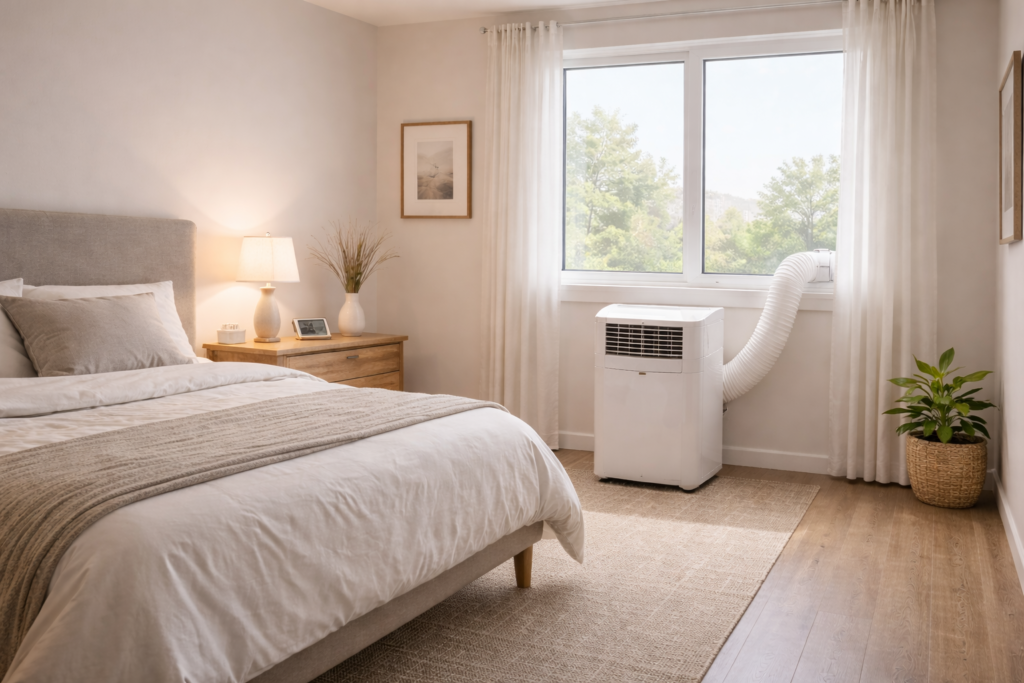
Where NOT to Place a Portable AC in a Bedroom
Avoid these common mistakes, which often make a unit feel louder than it actually is:
-
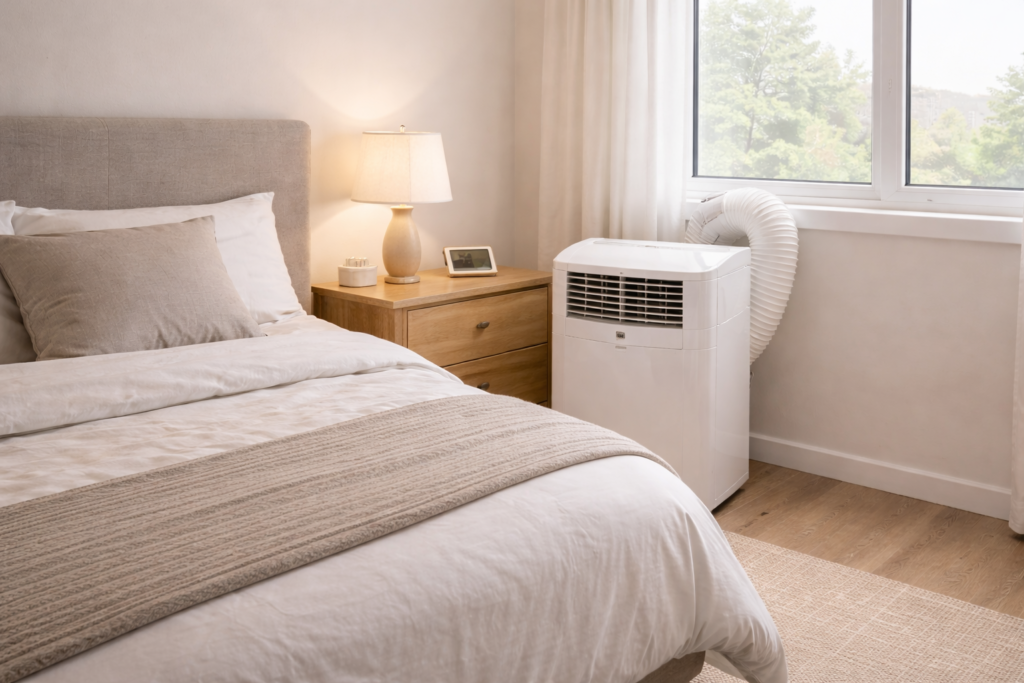
Right next to the bed, where even a quieter unit will sound loud at close range
-
In a corner surrounded by furniture, which traps sound and disrupts airflow
-
Against thin internal walls, where noise transfers easily
-
On uneven or hollow flooring, which increases vibration and rattling
Good placement reduces noise more effectively than many “quiet mode” settings.
Best Placement Based on Bedroom Layout
Small Bedrooms (Under ~250 sq ft)
In small bedrooms, place the unit as far from the bed as possible, even if airflow isn’t perfectly centered. Prioritise distance over symmetry, and keep the exhaust hose short and straight.
In very small rooms, placement distance matters more than BTU size.
Medium Bedrooms (250–350 sq ft)
For medium-sized bedrooms, ideal placement is near the window on the wall opposite the bed. Leave at least 12 inches of clearance around the unit and avoid placing it directly under shelves or desks.
This setup balances cooling efficiency with reduced noise perception.
For bedrooms in this size range, see our comparison of portable air conditioners for bedrooms designed for quieter operation.
Bedrooms with Limited Window Options
If the window is close to the bed, angle the unit slightly away from the sleeping area. Using furniture such as a dresser can help break the direct sound path, and airflow should not be aimed directly at the bed.
Small adjustments can noticeably change how loud the unit feels.
Reducing Vibration Noise (Often Overlooked)
Vibration is one of the biggest causes of buzzing or rattling sounds at night.
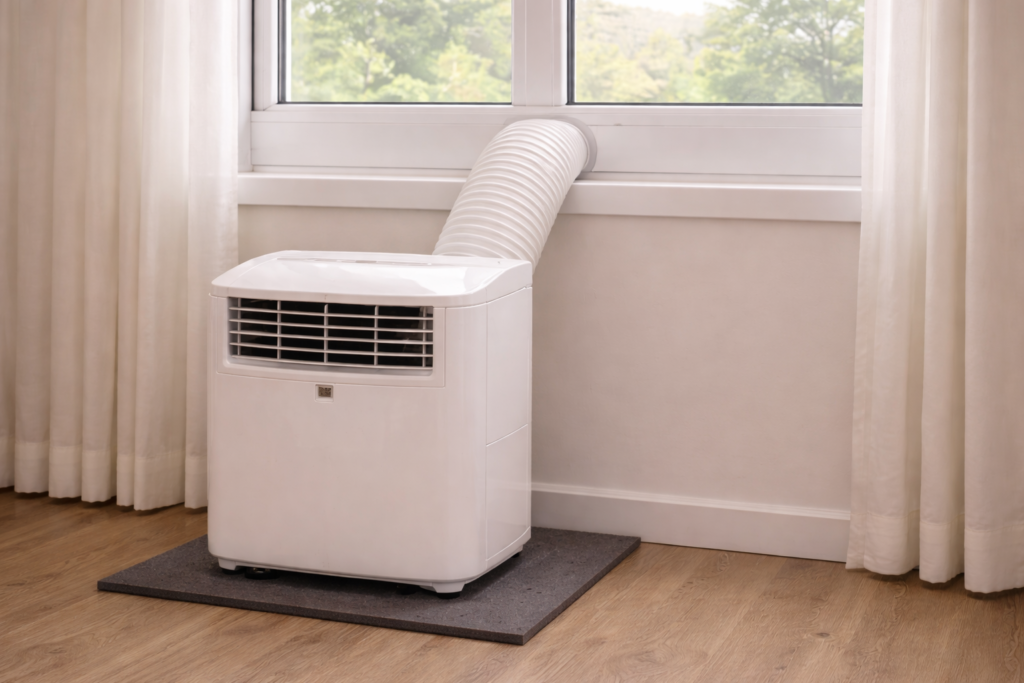
To reduce it, place the unit on a solid, flat surface, use a rubber mat or anti-vibration pad underneath, and ensure all panels and hose connections are secure.
These steps don’t affect cooling performance but often reduce nighttime noise significantly.
Exhaust Hose Placement and Noise
The exhaust hose can create extra noise if it is sharply bent, touches walls or furniture, or vibrates against the window kit.
For quieter operation, keep the hose as straight and short as possible, avoid contact with hard surfaces, and make sure the window kit is tightly fitted.
Poor hose placement can make a quiet unit sound louder than expected.
Does Placement Matter More Than the Model?
In many cases, yes.
A well-placed average unit can feel quieter than a poorly placed “quiet” model. That’s why placement matters even if you’ve chosen a bedroom-friendly portable AC.
If you’re comparing models for sleep use, our bedroom portable air conditioner guide highlights units better suited to night operation.
Placement Tips for Specific Use Cases
Light Sleepers
Maximise distance from the bed, avoid direct airflow paths, and use lower fan speeds at night where possible.
Renters
Stick to window kits only, use vibration mats instead of modifying floors, and avoid placing units against shared walls.
Home Office / Bedroom Combos
Position the unit closer to the work area during the day, and re-angle airflow away from the bed at night if possible.
Final Thoughts
Portable air conditioner placement plays a huge role in how quiet a bedroom feels at night. Distance from the bed, vibration control, and airflow direction often matter more than small differences in noise ratings.
Before replacing a unit or assuming it’s too loud, adjusting placement is the easiest and most effective first step.
If you’re still deciding which model suits bedroom use best, see our comparison of portable air conditioners for bedrooms, or explore room-size recommendations in our portable AC sizing guide.