Portable air conditioners all look similar on the outside, but how they move air makes a big difference to real-world cooling. One of the most important — and most misunderstood — differences is whether a unit uses a single hose or dual hoses.
If you’re cooling a small bedroom, apartment, dorm, or home office, choosing the wrong hose design can lead to weak cooling, longer runtimes, and unnecessary noise. This guide explains the difference clearly and helps you decide which setup actually works best for small spaces.
Quick answer (for impatient readers)
Single-hose portable air conditioners are cheaper, more common, and suitable for many small rooms, but they are less efficient because they pull warm air back into the space.
Dual-hose portable air conditioners cool more efficiently and maintain better room pressure, but they cost more and take up slightly more window space.
For most small bedrooms and apartments, a well-sized single-hose unit is usually sufficient. For hot climates, high humidity, or longer daily use, dual-hose models offer noticeable performance benefits.
Room size matters more than hose count alone. If you’re unsure about sizing, see this guide:
https://smallroomaircoolers.com/how-to-choose-the-right-size-portable-ac-for-your-room/
How portable air conditioner venting works
All portable air conditioners generate heat as they cool. That heat must be vented outside, usually through a window kit. The hose system performs two jobs: exhausting hot air and replacing the air used by the unit.
The key difference between single-hose and dual-hose units is where that replacement air comes from, which directly affects cooling efficiency.
What is a single-hose portable air conditioner?
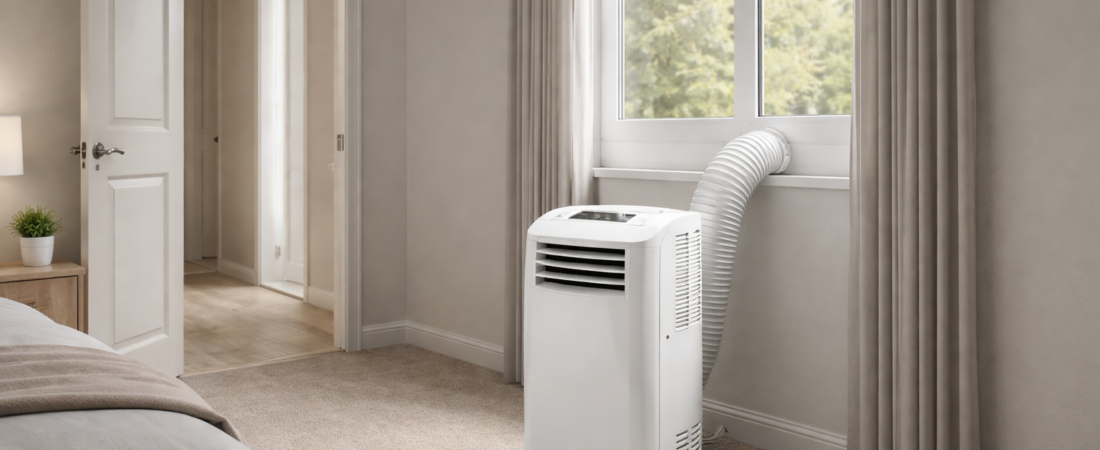
A single-hose portable air conditioner uses one hose to exhaust hot air outdoors. To replace that air, it pulls air from inside the room, cools part of it, and vents the rest outside.
Because air is being pushed out of the room, this creates negative pressure. That pressure draws warm air back into the space through door gaps, hallways, or poorly sealed windows.
Pros
-
Lower purchase price
-
Smaller overall footprint
-
Easier window installation
-
Widely available in 8,000–10,000 BTU sizes
Cons
-
Lower cooling efficiency
-
Longer runtimes during hot weather
-
Can struggle in high humidity
-
Slightly higher real-world energy use
Single-hose units dominate the small-room market and are commonly used in bedrooms. Many models reviewed in this category use this design:
https://smallroomaircoolers.com/best-portable-air-conditioners-for-bedrooms-quiet-compact-picks/
What is a dual-hose portable air conditioner?
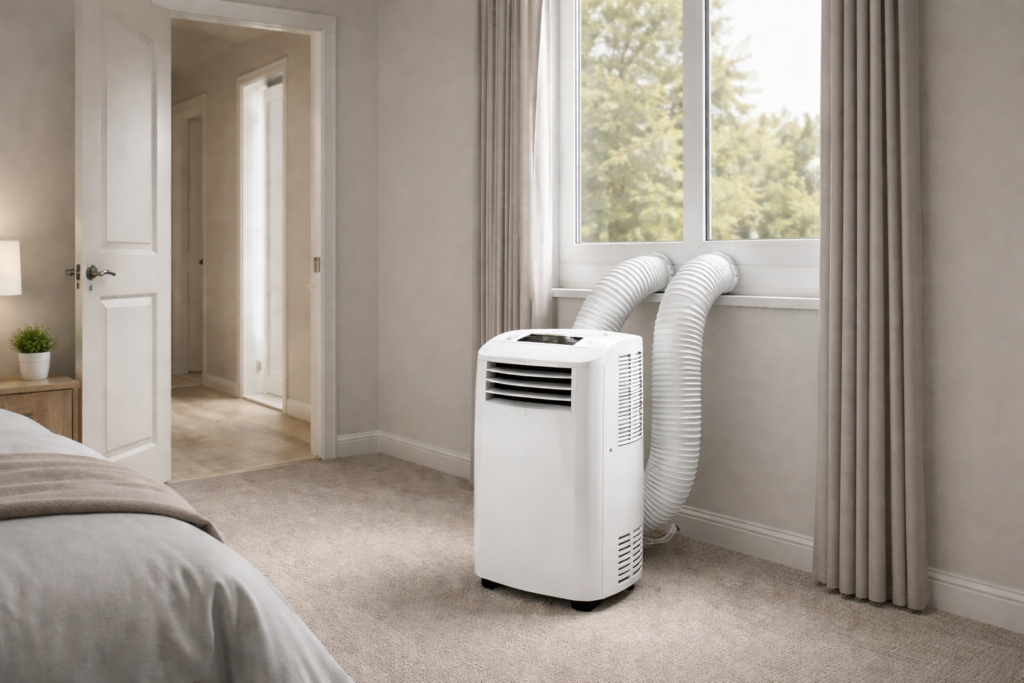
A dual-hose portable air conditioner uses two separate hoses. One hose pulls outside air into the unit, while the second hose exhausts hot air back outside.
Dual-hose designs are less common but tend to deliver more consistent cooling, and the Whynter ARC-101CW is a good real-world example of how this setup performs in practice.
This balanced airflow system prevents the unit from relying on cooled room air to manage heat.
Because intake and exhaust are balanced, the room maintains neutral pressure. Less warm air is pulled back into the space, allowing the unit to cool faster and more consistently.
Pros
-
More efficient cooling
-
Better performance in heat and humidity
-
Shorter cooling cycles
-
More stable room temperatures
Cons
-
Higher upfront cost
-
Larger window kit
-
Fewer options in smaller BTU sizes
Dual-hose designs are more common in higher-capacity models, including those suited to medium-sized rooms:
https://smallroomaircoolers.com/best-portable-air-conditioners-for-300-500-sq-ft-rooms/
Cooling efficiency in small rooms
In small enclosed rooms, roughly 120–300 square feet, both hose designs can work when properly sized. The difference shows up in how hard the unit has to work to maintain temperature.
Single-hose units perform best when the room is tightly sealed, the AC is correctly sized, and outdoor temperatures are moderate. Efficiency drops when doors are frequently opened, adjacent rooms are warm, or humidity levels are high.
Dual-hose units maintain cooling output more consistently during heatwaves, high humidity, and long daily runtime. They typically reach the target temperature faster and hold it with less cycling.
Humidity plays a major role in perceived cooling performance. This article explains why some units struggle more than others:
https://smallroomaircoolers.com/do-portable-air-conditioners-work-in-high-humidity/
Noise, air pressure, and comfort differences
Noise levels are influenced by runtime and air pressure, not just decibel ratings.
Single-hose units often run longer to maintain temperature, leading to more frequent compressor cycles. Negative pressure can also increase airflow noise from gaps around doors or windows.
Larger single-hose units can still work well when correctly sized and sealed, as seen with models like the TOSOT 12,000 BTU portable air conditioner.
Dual-hose units usually complete cooling cycles faster and maintain steadier temperatures, which often results in quieter overnight operation even if the rated decibel level is similar.
Placement still plays a major role regardless of hose type:
https://smallroomaircoolers.com/best-portable-air-conditioner-placement-for-quiet-sleep/
Energy efficiency and operating costs
Dual-hose portable air conditioners are generally more energy-efficient in real-world use. They don’t waste cooled air, reach target temperatures faster, and cycle off more often.
Some single-hose units are engineered to minimise these losses, and efficiency-focused models like the Midea 10,000 BTU portable air conditioner show how design choices can reduce real-world power use.
Single-hose units may cost less upfront but often consume more electricity during extended use, particularly in apartments with warm adjacent spaces.
Apartment and renter considerations
For renters, installation flexibility is often just as important as performance.
Single-hose units use smaller window kits, are easier to remove, and work well with narrow or sliding windows.
Dual-hose units require larger window panels and better sealing. They remain renter-friendly, but poor window fit can reduce their advantages.
If window access is limited, review your options carefully before choosing either design:
https://smallroomaircoolers.com/can-a-portable-air-conditioner-be-used-without-a-window/
Which is better for bedrooms, offices, and dorms?
For bedrooms, a single-hose unit is usually sufficient if it’s properly sized and well sealed. Dual-hose units are better for hot sleepers, warm climates, or overnight operation.
Many popular bedroom models use a single-hose design, including widely used units like the BLACK+DECKER BPACT10WT, which are designed for smaller enclosed spaces.
For home offices, dual-hose units manage heat buildup from electronics more effectively, while single-hose units are fine for part-time daytime use.
For dorms and rentals, single-hose units are more common due to cost and size limits. In shared buildings, noise and placement often matter more than hose count.
In smaller rooms with lower heat load, compact options such as the Shinco 8,000 BTU portable air conditioner are often sufficient despite using a single-hose layout.
If sound levels are a priority, compare expected noise ranges here:
https://smallroomaircoolers.com/how-loud-is-a-portable-air-conditioner-at-night-quiet-db-levels-explained/
Final recommendation
There is no universal “better” option — only the better choice for your situation.
Choose a single-hose portable air conditioner if you’re cooling a small, sealed room, want a lower upfront cost, and need maximum installation flexibility.
Choose a dual-hose portable air conditioner if you live in a hot or humid climate, run the AC for long periods, and want faster, more stable cooling.
For most small rooms, proper sizing and good sealing matter more than hose count. If you’re still narrowing options, start with a room-size-based overview:
https://smallroomaircoolers.com/portable-air-conditioners-for-small-spaces/