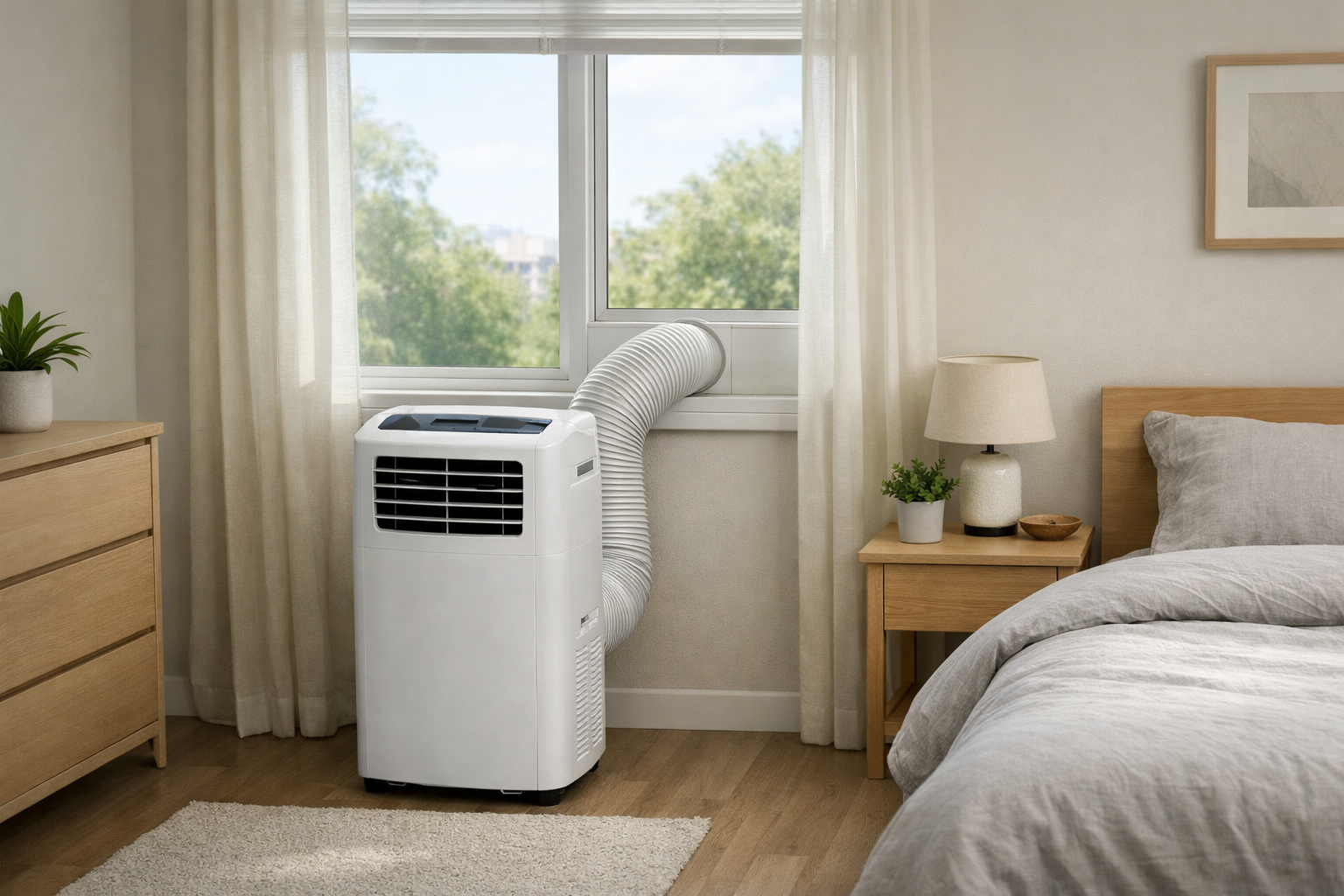
Installing a portable air conditioner in an apartment often comes with extra constraints. You may be limited by window type, rental rules, or restrictions on permanent modifications. The good news is that most portable air conditioners are designed specifically for these situations and can be installed without drilling, cutting, or altering the property.
This guide explains the most common apartment-friendly installation options, what works best in each scenario, and what to avoid if you want cooling without landlord issues.
Standard Sliding Window Installation
The most common installation method uses a window vent kit that comes with the portable air conditioner.
These kits typically include:
- An adjustable window panel
- A hose connector
- Foam or rubber seals
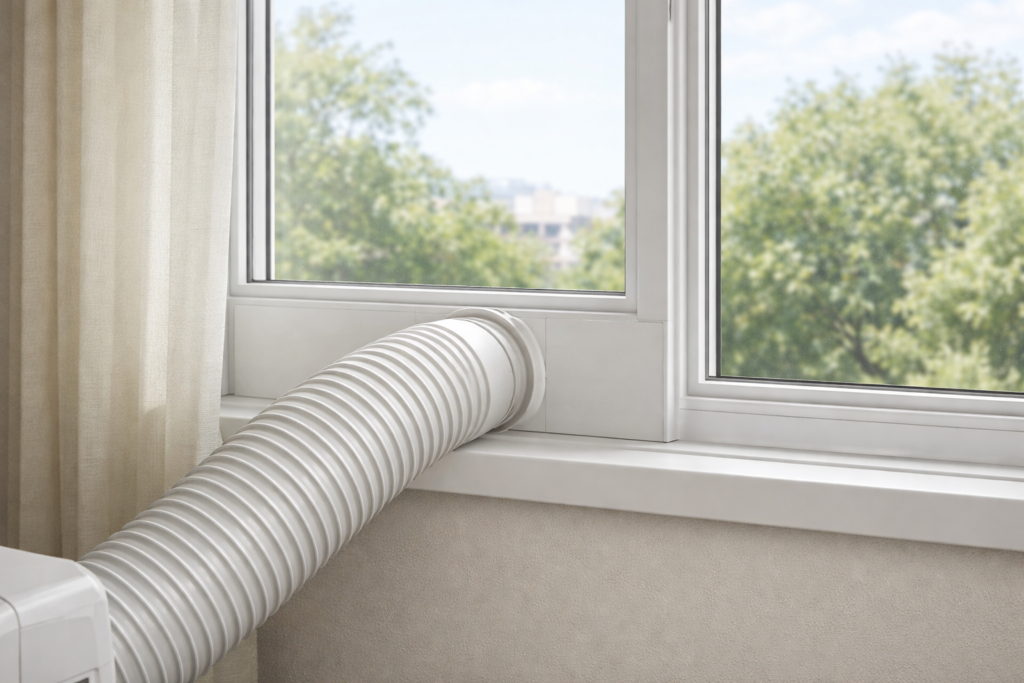
The panel fits into a partially opened window, allowing hot air to vent outside while the window remains mostly closed.
This option works best for:
- Vertical sliding windows
- Double-hung windows
- Apartments with standard window frames
Because the kit is removable and does not require drilling, it is generally considered renter-friendly.
Horizontal and Casement Window Solutions
Not all apartments have traditional vertical windows. Some use horizontal sliding windows or casement windows that open outward.
In these cases, installation is still possible, but it may require:
- A vertically mounted window panel
- Plexiglass or acrylic cut to size
- Foam sealing strips to prevent air leaks
Casement window kits are often sold separately or included with certain models. While setup takes a little more effort, the installation remains temporary and reversible.
Sliding Glass Door Installation
Apartments with sliding glass doors can use a modified version of the standard window kit.
Instead of fitting horizontally, the vent panel is installed vertically along the door frame. Most kits are adjustable enough to span the full height of the opening.
This option works well for:
- Studio apartments
- Living rooms with limited window access
- Units where bedroom windows are unsuitable
As with window installations, no permanent changes are required, making this a common choice for renters.
Venting Through a Wall or Ceiling (Usually Not Allowed)
Some portable air conditioners can technically be vented through a wall or ceiling, but this method is rarely appropriate for apartments.
Wall venting typically requires:
- Drilling a large hole
- Installing a permanent vent flange
- Making structural changes
In most rentals, this violates lease terms and can result in damage charges. For apartment use, window-based venting options are almost always the better choice.
Venting Without a Window
In apartments without usable windows, options become more limited.
Some people attempt to vent portable air conditioners through:
- Drop ceilings
- Bathroom exhaust vents
- Dryer vents
These setups are often inefficient and may be unsafe or non-compliant with building codes. In situations like this, it’s important to understand whether a portable air conditioner can realistically work at all before purchasing.
For renters who can’t make permanent changes, choosing a renter-friendly portable air conditioner becomes especially important, as some models are easier to install and remove without damaging windows or walls.
Sealing and Insulation Tips for Apartments
Regardless of installation method, proper sealing makes a significant difference in performance.
Simple steps include:
- Using foam strips around window gaps
- Sealing unused window sections completely
- Keeping hose lengths as short and straight as possible
Better sealing reduces heat re-entry, improves cooling efficiency, and helps the unit run quieter — which matters in shared buildings.
Things Renters Should Avoid
To stay on the safe side of most lease agreements, renters should generally avoid:
- Drilling holes in walls or frames
- Removing window panes
- Making permanent structural changes
- Using adhesives that leave residue or damage paint
Portable air conditioners are designed to be temporary solutions, and sticking to reversible installations helps prevent disputes when moving out.
Choosing the Right Setup for Your Apartment
The best installation option depends on your apartment layout, window type, and rental restrictions.
In most cases:
- Standard windows offer the easiest setup
- Sliding doors provide flexibility for larger spaces
- Casement windows require extra planning but remain viable
Understanding these options upfront helps you choose a portable air conditioner that fits your space without unnecessary hassle.