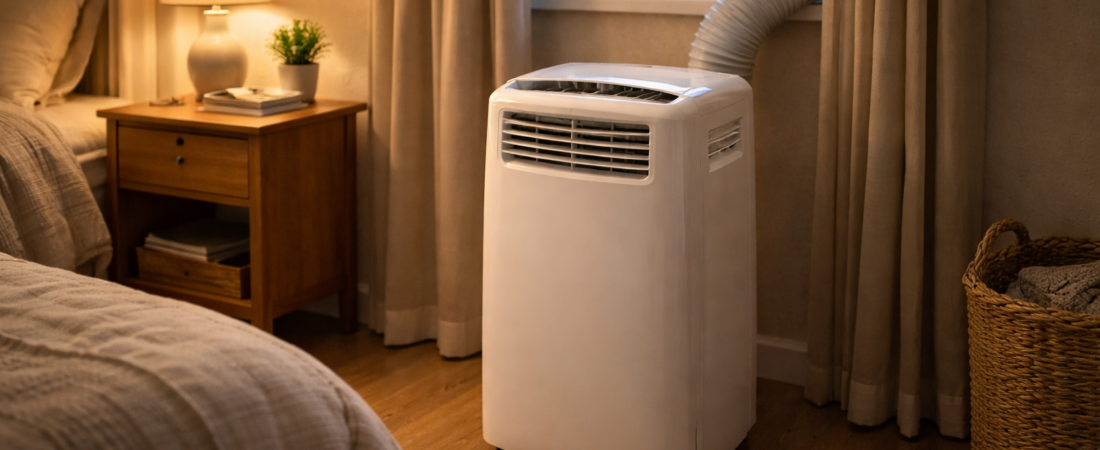
Portable air conditioners are often used in bedrooms, home offices, studio apartments, and rental spaces where noise matters just as much as cooling performance. While all portable AC units produce some sound, there are meaningful differences between models marketed as “quiet” and standard units.
Understanding how portable air conditioner noise works — and what “quiet” actually means — makes it much easier to choose the right unit for a small room.
Why Portable Air Conditioners Make Noise
Portable air conditioners contain several moving components inside a single cabinet:
-
A compressor
-
One or two internal fans
-
Air intake and exhaust systems
-
A condenser and evaporator coil
Because all of these components operate inside the room (unlike split systems, which place the compressor outdoors), some operational sound is unavoidable.
The main sound sources are:
-
Compressor cycling
-
Fan airflow
-
Air movement through the exhaust hose
-
Vibration against hard flooring
Noise does not automatically mean poor quality. It simply reflects how the internal components operate.
Understanding Decibel Ratings
Portable AC noise is typically measured in decibels (dB).
For context:
-
30 dB = Very quiet (library level)
-
40–45 dB = Quiet residential background
-
50–55 dB = Moderate conversation level
-
60+ dB = Noticeably loud in a small room
Most standard portable air conditioners operate between 50 and 60 dB during cooling mode.
Models described as “quiet” usually operate between 42 and 50 dB on low fan or sleep mode.
It’s important to note that manufacturers often list the lowest decibel rating (typically fan-only or low-speed mode), not the maximum cooling noise level.
What Makes a Portable AC Quieter?
Noise levels are influenced by several design factors.
1. Inverter Compressors
Some higher-end portable AC units use inverter-driven compressors. These adjust output gradually rather than switching fully on and off.
Benefits include:
-
Reduced compressor cycling noise
-
Smoother operation
-
Lower perceived sound levels
Inverter models are often quieter overall compared to fixed-speed units.
2. Dual Hose Design
Dual hose portable air conditioners draw intake air from outside rather than using conditioned indoor air.
This can reduce:
-
Pressure imbalance
-
Overworking of the compressor
-
Sudden high-speed fan cycling
For a full breakdown of how hose configuration affects performance, see Single Hose vs Dual Hose Portable Air Conditioners.
3. Fan Speed Control
Units with multiple fan speeds allow you to lower airflow noise during sleep or quiet work periods.
Sleep mode typically:
-
Reduces fan speed
-
Gradually increases temperature setpoint
-
Minimises compressor cycling
4. Cabinet Insulation and Build Quality
Better internal insulation reduces vibration and sound transmission. Heavier units sometimes operate more quietly simply because they dampen vibration more effectively.
Realistic Expectations for Bedroom Use
Many people search specifically for a quiet portable air conditioner for bedrooms.
While some models are noticeably quieter than others, even a “quiet” portable AC will still produce a steady background hum.
In a small bedroom (10–20 m² / 100–200 sq ft):
-
42–48 dB is generally tolerable for sleep
-
50–55 dB may feel noticeable in very quiet environments
-
Units above 58 dB can feel disruptive at night
If ultra-low noise is a top priority, reviewing expected room size is important. An oversized unit can cycle aggressively and sound louder than necessary. See How to Choose the Right Size Portable AC for Your Room for sizing guidance.
Placement Matters for Noise
Noise perception is influenced not only by the unit itself, but also by placement.
To minimise sound:
-
Keep the unit on a level surface
-
Avoid placing it directly against thin walls
-
Use vibration-absorbing pads under hard floors
-
Keep the exhaust hose as straight and short as possible
Improper hose setup can increase airflow resistance and create additional fan noise.
For installation considerations in rentals or apartments, see Portable Air Conditioner Installation Options for Apartments.
Comparing “Quiet” Models to Standard Models
A quiet model does not necessarily cool less effectively. However:
-
Quieter units often cost more
-
They may use inverter compressors
-
Cooling performance still depends on correct BTU sizing
Noise level should be considered alongside:
-
Room size
-
DOE vs ASHRAE cooling capacity
-
Energy efficiency
-
Exhaust configuration
For a technical explanation of cooling capacity ratings, refer to Portable Air Conditioner Cooling Capacity Explained (ASHRAE vs DOE).
When Noise Becomes a Problem
Portable air conditioners may become louder than expected if:
-
The compressor is short cycling
-
The filter is clogged
-
The exhaust hose is kinked
-
The room is undersized or oversized for the BTU rating
-
The unit is placed on an uneven surface
If a unit suddenly becomes louder, basic maintenance checks should be performed before assuming a defect.
Should You Prioritise Noise Above All Else?
In very small spaces such as studio apartments or shared bedrooms, noise can meaningfully affect comfort.
However, selecting a unit that is too small purely for quiet operation can reduce cooling effectiveness. A balance between:
-
Appropriate BTU capacity
-
Hose configuration
-
Inverter vs fixed compressor
-
Published decibel rating
will usually provide better long-term results than focusing on decibel numbers alone.
Quiet portable air conditioners are best understood as lower-noise designs, not silent machines.
With realistic expectations and correct sizing, they can provide comfortable cooling without overwhelming a small room environment.