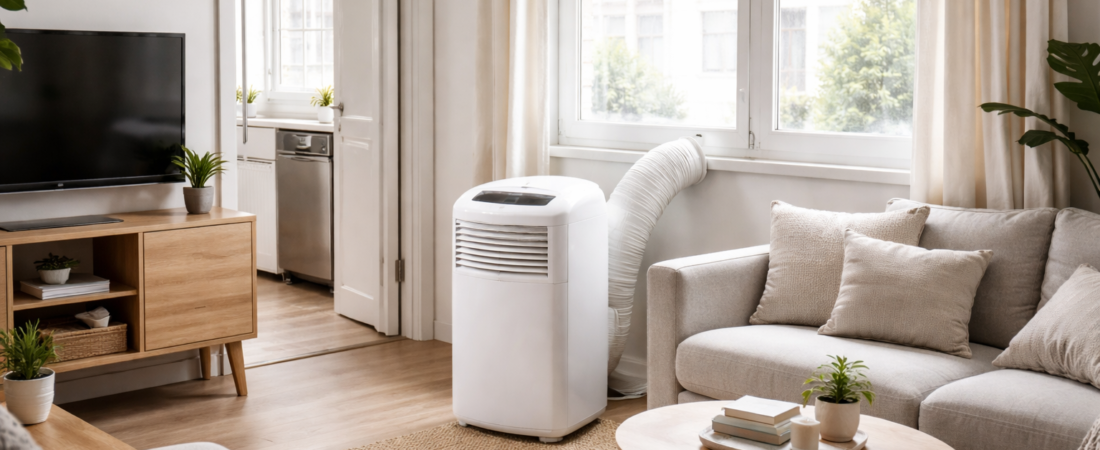
Portable air conditioners are one of the few cooling options that genuinely work for renters without requiring drilling, wall modifications, or permanent installation. Unlike fixed air conditioning systems, portable units are designed to vent hot air through removable window kits and can be installed and removed without leaving damage behind.
This guide explains why portable air conditioners are well suited to rental properties, what features renters should prioritise, and how to choose a unit that stays lease-friendly while still delivering effective cooling.
Why Portable Air Conditioners Are Ideal for Renters
Renters often face restrictions that homeowners do not. Lease agreements commonly prohibit permanent modifications, and many apartments, bedrooms, and rentals lack built-in air conditioning altogether.
Portable air conditioners solve these issues by offering removable installation, no drilling or wall penetration, compatibility with standard apartment windows, and easy relocation when you move. For renters cooling compact living areas, portable air conditioners for small spaces provide a practical balance between performance and flexibility.
What “No Drilling, No Damage” Actually Means

A renter-friendly portable air conditioner uses a window venting kit that fits into an open window and seals using adjustable panels. The exhaust hose connects to this panel and directs hot air outdoors.
Nothing is screwed into walls, floors, or window frames. When the unit is removed, the window can be returned to its original condition without visible damage. In situations where a traditional window setup is not possible, can a portable air conditioner be used without a window explains alternative venting options renters sometimes rely on.
Key Features Renters Should Prioritise
Window Kit Compatibility
Most rental apartments use vertical sliding or horizontal sash windows. A suitable unit should include an adjustable window kit that fits common window styles without requiring cutting or permanent alteration.
Choosing the Right BTU Size
Selecting the correct cooling capacity is especially important in apartments and rentals. Oversized units waste energy, while undersized models struggle to cool enclosed spaces effectively. How many BTUs do I need for a portable air conditioner (room size guide) explains how to match BTU output to square footage, while how to choose the right size portable AC for your room helps clarify edge cases like open layouts or high ceilings.
Noise Levels in Small Living Spaces
Bedrooms and studio apartments require quieter operation, particularly at night. Some portable air conditioners are noticeably louder than others, which can be disruptive in close quarters. How loud is a portable air conditioner at night provides realistic expectations around noise levels and sleep impact.
Single-Hose vs Dual-Hose Designs
Single-hose units are more common and simpler to install, while dual-hose models can offer improved efficiency in warmer conditions. Both designs can work for renters, but the differences matter. Single-hose vs dual-hose portable air conditioners explains which option makes more sense for small rental rooms.
Best Portable Air Conditioner Types for Rental Properties
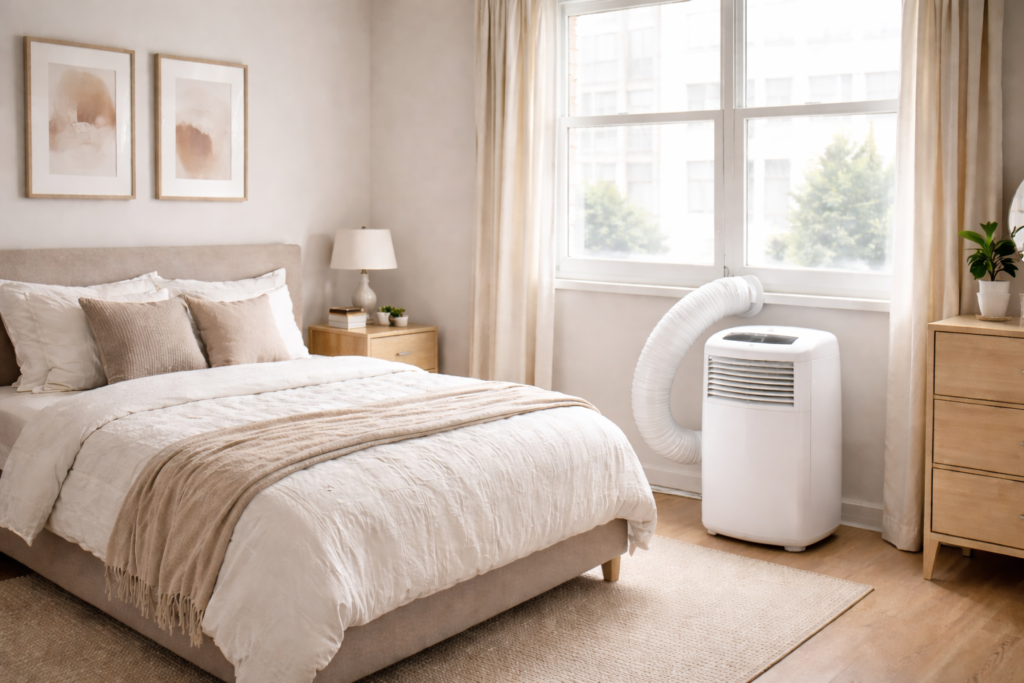
Smaller apartments, bedrooms, and studio rentals typically benefit from compact 8,000–10,000 BTU models that balance cooling performance with manageable size and noise levels. Renters focused on sleep comfort may want to explore best portable air conditioners for bedrooms (quiet, compact picks) designed for enclosed spaces.
For larger apartments and open-plan rentals, higher-capacity units around 10,000–12,000 BTUs are often more suitable. These models handle wider living areas more effectively, as outlined in best portable air conditioners for 300–500 sq ft rooms.
Portable Air Conditioners Compared With Other Renter Cooling Options
Some renters consider alternatives such as evaporative coolers, fans, or hybrid cooling devices. In hot or humid environments, these options often fail to deliver meaningful temperature reduction.
Portable air conditioners actively remove heat and humidity, which is especially important in enclosed apartments. Do portable air conditioners work in high humidity explains why AC units are generally more reliable than air coolers in rental properties.
Installation Tips to Stay Lease-Friendly
To avoid lease issues, renters should rely only on the supplied window kit, avoid adhesives that leave residue, and refrain from cutting or permanently modifying window panels. Keeping all original parts makes removal straightforward when moving out.
Placement also plays a role in comfort. Best portable air conditioner placement for quiet sleep explains how to position a unit to reduce noise transfer in bedrooms and studio apartments.
Are Portable Air Conditioners Worth It for Renters?
For renters who need dependable cooling without permanent installation, portable air conditioners offer one of the best balances of performance, flexibility, and lease compliance.
While the upfront cost is higher than fans or evaporative coolers, portable AC units provide consistent temperature control, reduce humidity, and can move with you between rentals without requiring landlord approval in most cases. 12 types of people who actually benefit from portable AC units outlines common renter scenarios where these systems make sense.
Final Thoughts
Portable air conditioners remain one of the most practical cooling solutions for renters who want effective temperature control without drilling, damage, or permanent installation.
By choosing the right size, understanding venting requirements, and selecting renter-friendly designs, it’s possible to stay comfortable in apartments, bedrooms, and rentals while staying within lease restrictions.