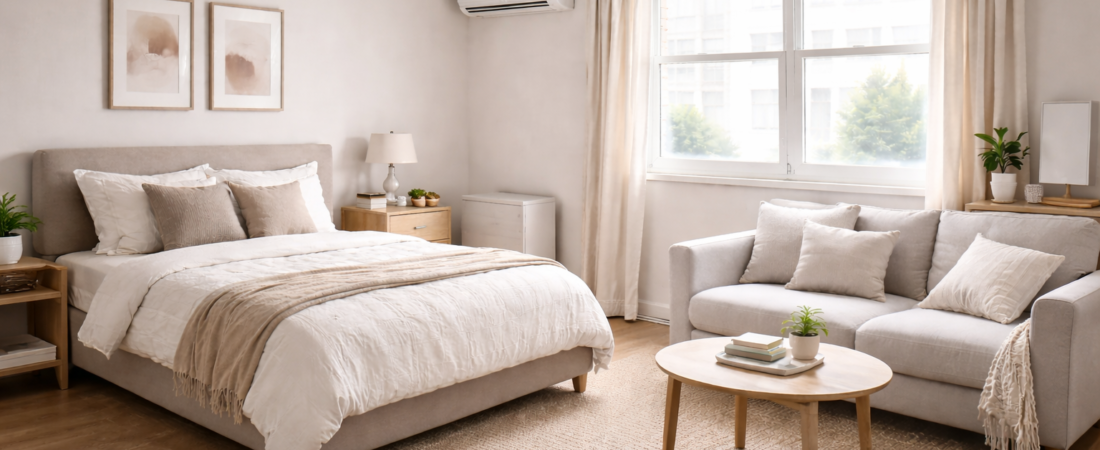
Studio apartments present unique cooling challenges. With limited square footage, combined living and sleeping areas, and close proximity to neighbors, cooling systems need to be compact, effective, and as quiet as possible.
This guide explains what to look for in a portable air conditioner for a studio apartment, how to choose the right size, and why certain designs perform better in small, open-plan living spaces.
Why Studio Apartments Need a Different Approach
Unlike one-bedroom apartments, studio layouts combine sleeping, living, and working areas into a single space. That means any cooling system runs closer to where you sleep and spend most of your time.
Oversized air conditioners can be noisy and inefficient, while undersized units struggle to cool the space evenly. For studio apartments, balance matters more than raw cooling power.
Ideal Portable AC Size for Studio Apartments
Most studio apartments fall between 200 and 400 square feet. In this range, portable air conditioners rated between 8,000 and 10,000 BTUs are often the best fit.
Choosing the correct size helps avoid excessive cycling, unnecessary noise, and uneven cooling. How many BTUs do I need for a portable air conditioner (room size guide) explains how square footage, ceiling height, and insulation affect BTU requirements, while how to choose the right size portable AC for your room helps fine-tune decisions for open-plan layouts.
Noise Levels Matter More in Studios

Because studio apartments have no separate bedroom, noise becomes a primary concern. Even moderate operational noise can be disruptive when the unit runs continuously near sleeping or working areas.
Some portable air conditioners are engineered with quieter compressors and improved airflow design. Understanding realistic noise expectations is essential. How loud is a portable air conditioner at night breaks down decibel levels and explains what “quiet” actually means in real-world use.
Single-Hose vs Dual-Hose Units in Studio Apartments
Both single-hose and dual-hose portable air conditioners can work in studios, but the differences are more noticeable in small spaces.
Single-hose units are easier to install and more common, making them popular in rental apartments. Dual-hose units tend to be more efficient because they reduce negative air pressure, which can help maintain more stable temperatures in open layouts. Single-hose vs dual-hose portable air conditioners explains how each design performs in compact living spaces.
Compact Designs That Fit Studio Layouts

Floor space is limited in studio apartments, so unit size and placement matter. Slim-profile models that sit flush against walls or windows are easier to integrate without blocking walkways or furniture.
Proper placement also affects comfort. Best portable air conditioner placement for quiet sleep explains how positioning can reduce perceived noise and improve airflow, even in small studio layouts.
Portable ACs vs Other Cooling Options for Studios
Some studio dwellers consider alternatives like fans or evaporative air coolers to save space or reduce noise. While these options can improve airflow, they do not provide true cooling in hot conditions.
Portable air conditioners actively remove heat and humidity, which makes them more effective in enclosed studio spaces. For a broader comparison of options, portable air conditioner alternatives for small apartments outlines where non-AC cooling methods fall short.
Are Portable Air Conditioners Worth It for Studio Apartments?
For most studio apartments, portable air conditioners offer the best balance between performance, flexibility, and rental-friendly installation. They provide consistent temperature control without requiring permanent modifications or landlord approval in most cases.
For studio apartments where space and noise sensitivity matter most, compact 8,000 BTU models are often a practical starting point. The SHINCO 8000 BTU portable air conditioner is one example of a unit designed for smaller, enclosed living spaces.
Studios often benefit from quieter, mid-capacity models that prioritise efficiency over raw power. Best portable air conditioners for bedrooms (quiet, compact picks) highlights models and features that translate well to studio living.
Final Thoughts
Cooling a studio apartment effectively requires careful consideration of size, noise, and layout. Portable air conditioners designed for smaller spaces can provide reliable cooling without overwhelming the room or disrupting daily life.
By choosing the right capacity, understanding noise trade-offs, and placing the unit correctly, studio apartment dwellers can stay comfortable even during sustained heat.