Small apartment dwellers often look for cooling alternatives before committing to a portable air conditioner. Space limitations, noise concerns, energy costs, and rental restrictions all push people to explore other options first.
This guide reviews portable air conditioner alternatives for small apartments, showing where each works best, where they fall short, and when portable ACs remain most effective.
Why Apartment Dwellers Look for Portable AC Alternatives
In apartments and small rentals, installing permanent air conditioning systems is often not allowed. Some units also lack windows suitable for venting, while others already feel cramped with large appliances.
Many people want cooling options that are cheaper, quieter, or easier to install than a portable air conditioner. Understanding alternative limits avoids wasted money and unmet expectations.
Evaporative (Swamp) Coolers
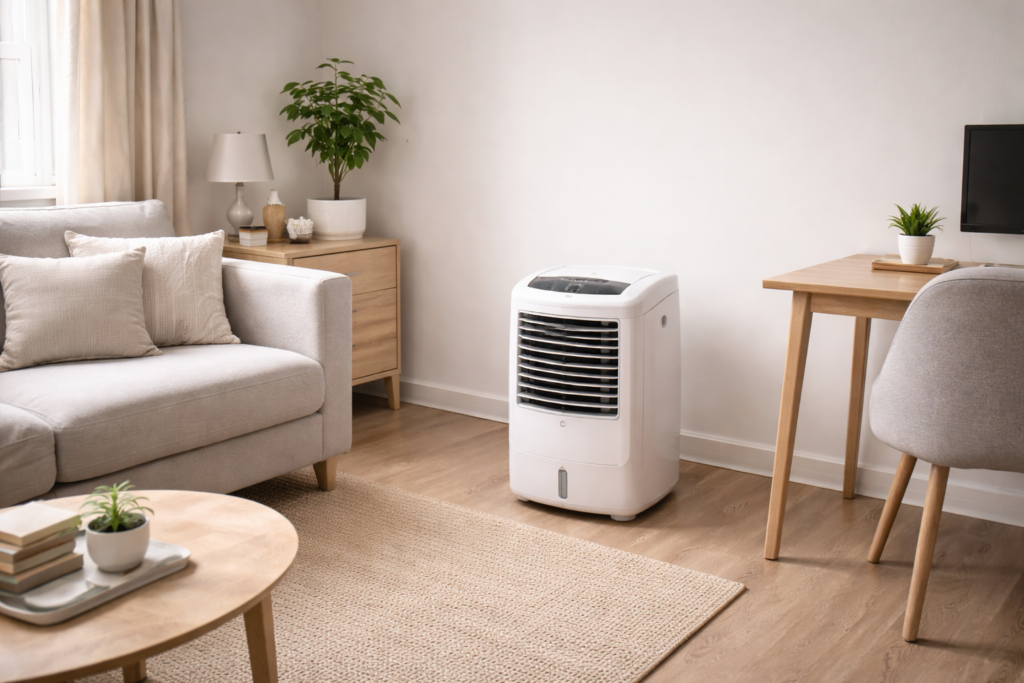
Evaporative coolers are often marketed as air conditioner replacements, but they work very differently. Instead of removing heat, they cool the air through water evaporation.
In dry climates, evaporative coolers can provide modest relief from the heat. In apartments with higher humidity, their effectiveness drops sharply. For enclosed spaces, they can actually increase indoor humidity and discomfort. The reason portable air conditioners work in high humidity is an important consideration when comparing cooling options.
Evaporative coolers also do not vent heat outside, which limits their ability to cool a closed apartment room effectively.
Window Fans and Circulation Fans
Fans are one of the most common cooling tools used in apartments. Window fans can help move hot air out, while floor and tower fans improve airflow.
While fans make rooms feel more comfortable through air movement, they do not lower room temperature. In very hot conditions, fans simply circulate warm air. They are best used as a supplement rather than a replacement for active cooling systems.
For very small apartments, fans can reduce reliance on air conditioning but are rarely sufficient on their own during heatwaves.
Portable Air Coolers vs Portable Air Conditioners
Portable air coolers are sometimes confused with portable air conditioners, but they are not interchangeable. Air coolers rely on evaporation and airflow, while portable AC units actively remove heat and humidity from the room.
In spaces needing true cooling, portable air conditioners are more reliable than air coolers, especially in enclosed or humid apartments.
Mini-Split Systems (Why They Rarely Work for Apartments)
Ductless mini-split systems are highly efficient and quiet, but they require permanent installation. Wall-mounted indoor units, exterior compressors, and refrigerant lines make them impractical for most renters.
Unless already installed, mini-splits need landlord approval and modifications, making them unrealistic for most renters despite their performance.
Using a Portable Air Conditioner Without a Window
Some apartments lack windows for venting, leading residents to seek alternatives to portable ACs.
However, portable air conditioners can sometimes be vented through sliding doors, wall adapters, or other openings. Can a portable air conditioner be used without a window? It explains which venting options are feasible and which should be avoided.
In many situations, adapting a portable AC is still more effective than switching to a weaker cooling alternative.
Noise Considerations in Small Apartments
Noise is a major concern in apartments, especially studios and bedrooms. Some cooling alternatives appear quieter simply because they are less powerful.
Portable air conditioners do generate operational noise, but modern models vary widely in their noise levels. Understanding what noise levels to expect helps set realistic expectations. How loud is a portable air conditioner at night provides a clearer comparison between AC units and quieter but less effective alternatives.
When Portable Air Conditioners Are Still the Best Option
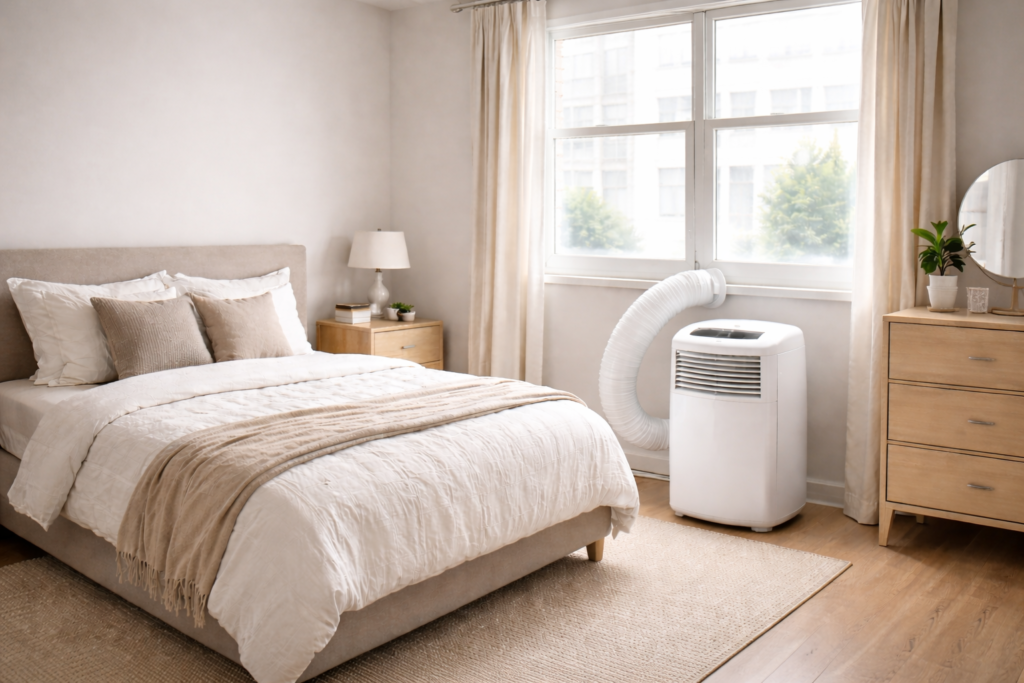
For most small apartments, portable air conditioners remain the most reliable way to achieve real cooling without permanent installation. They actively remove heat, control humidity, and work in enclosed spaces where fans and air coolers struggle.
Choosing the correct unit size is essential. How many BTUs do I need for a portable air conditioner (room size guide) explains how to match capacity to apartment square footage, while how to choose the right size portable AC for your room helps avoid common sizing mistakes.
Choosing the Right Cooling Solution for Your Apartment
Cooling needs vary by room size, climate, insulation, and noise. Fans and air coolers help in mild weather, but rarely replace air conditioners during sustained heat.
For renters comparing options, understanding the trade-offs makes it easier to choose a solution that actually works rather than one that only sounds appealing on paper. Portable air conditioners for small spaces remain one of the most practical choices for apartment living when real temperature control is required.
Final Thoughts
Portable air conditioner alternatives work in specific cases, but most require compromises in cooling or comfort.
For small apartments that need effective cooling without a permanent installation, portable air conditioners remain the most balanced solution. Knowing when alternatives are suitable — and when they are not — helps apartment dwellers make informed decisions and avoid disappointment.