
Living in a rental often means dealing with strict rules about permanent air conditioning. Window units may be banned, modifications aren’t allowed, and central air usually isn’t an option.
Portable air conditioners exist specifically for this situation.
The TOSOT 12,000 BTU portable air conditioner is one of the more commonly recommended options for renters who need real cooling power without violating a lease. This review breaks down what the unit actually delivers, how loud it really is, who it works best for, and where its limitations are.
What You’re Actually Buying
One of the most confusing aspects of this model is its BTU rating.
The TOSOT is marketed as a 12,000 BTU portable air conditioner, but under the newer DOE (Department of Energy) testing standard, it delivers 8,000 BTU of real-world cooling.
Both numbers are technically correct.
-
12,000 BTU (AHRAE) is measured under ideal lab conditions
-
8,000 BTU (DOE) reflects real-world performance, accounting for heat generated by the unit and exhaust losses
When comparing models, the DOE rating is the more realistic number to use.
Coverage and Room Size Suitability
Based on its real-world output, this unit is best suited for:
-
Rooms between 300 and 450 square feet
-
Large bedrooms
-
Studio apartments
-
Combined living room / kitchen areas
-
Home offices in older apartments
Because higher-capacity portable units can be louder and cycle differently, matching the unit to your room size matters. If you’re unsure, it helps to understand how many BTUs you need for a portable air conditioner before committing to a larger model.
Three-in-One Function: AC, Fan, and Dehumidifier
This unit combines three functions in one cabinet:
Air Conditioning
The primary function is cooling, using a single-hose exhaust system with a window kit designed for temporary installation.
Fan Mode
Fan-only mode circulates air without active cooling. This is useful in the evenings or when outdoor temperatures drop but indoor air still feels stagnant.
Dehumidifier
The dehumidifier removes up to 1.4 litres of moisture per hour. Most of this moisture is handled through an automatic evaporation system, meaning you won’t be emptying a tank constantly. In very humid environments, occasional draining may still be required.
Installation: Renter-Friendly by Design
Installation is straightforward and does not require tools.
The window panel adjusts to fit common window styles, and the exhaust hose connects directly to the unit. No drilling, permanent mounting, or structural changes are involved.
For renters concerned about lease compliance or security deposits, this type of setup is one of the main advantages of portable air conditioners.
The unit weighs just over 56 pounds and includes caster wheels, making it possible to move between rooms if needed.
Noise Levels (The Honest Version)
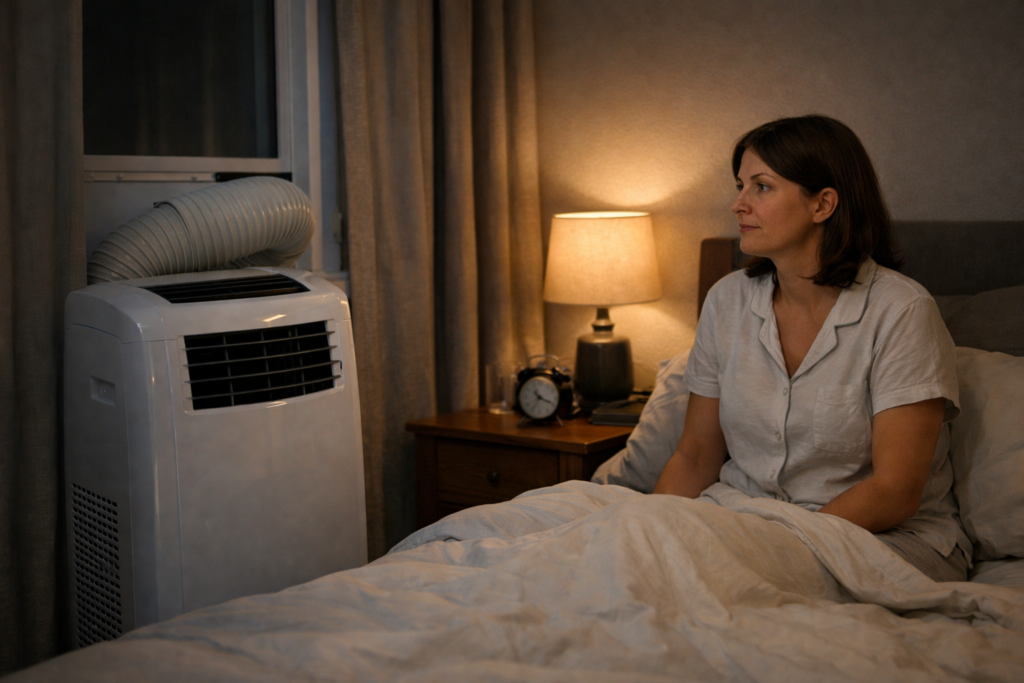
Portable air conditioners are louder than window units and mini-split systems. That’s unavoidable due to the compressor being inside the room.
The TOSOT operates at approximately:
-
66 dB on high
-
62 dB on low
That places it louder than normal conversation but quieter than many vacuum cleaners. Noise perception varies, especially at night, which is why understanding how loud a portable air conditioner is at night is important before choosing a higher-capacity model.
For most users, running the unit on lower fan speeds makes the sound manageable. Some adapt to it as background noise, while others find it more noticeable during sleep or calls.
Noise tolerance will be a deciding factor for light sleepers.
Cooling Performance in Real Spaces
Cooling with a portable unit is not instant.
If you’re comparing cooling performance across different designs, understanding how portable air conditioner hose design differences affect efficiency can help clarify whether this type of unit makes sense for your space.
Expect gradual temperature reduction rather than rapid drops. In warm conditions, users typically report noticeable comfort improvements within 30–45 minutes rather than immediate relief.
The 90-degree swing function helps distribute air more evenly across the room instead of concentrating airflow in a single direction. This improves overall comfort, especially in larger or open spaces.
Energy Use and Running Costs
The unit draws approximately 1.18 kWh during operation.
Actual energy costs depend on:
-
Local electricity rates
-
How many hours per day the unit runs
-
Insulation and room conditions
Portable air conditioners are generally less efficient than window units or central systems. This model does not advertise a high CEER rating, which is typical for portable designs.
The trade-off is flexibility rather than efficiency.
Maintenance Requirements
Maintenance is minimal:
-
The air filter is washable and reusable
-
Filter access is simple and tool-free
-
The automatic evaporation system reduces daily draining
Occasional cleaning and periodic draining in very humid climates are usually sufficient.
TOSOT 12,000 BTU Portable Air Conditioner → View on Amazon
Who This Unit Makes Sense For
This model is a good fit if:
-
You rent and cannot install permanent air conditioning
-
Your room falls within the 300–450 sq ft range
-
You need cooling that can be removed or relocated
-
You want one unit that cools and dehumidifies
It is less ideal if:
-
You are extremely sensitive to noise
-
You need to cool multiple separate rooms constantly
-
You expect instant, powerful cooling
-
Energy efficiency is your top priority
Advantages and Trade-Offs
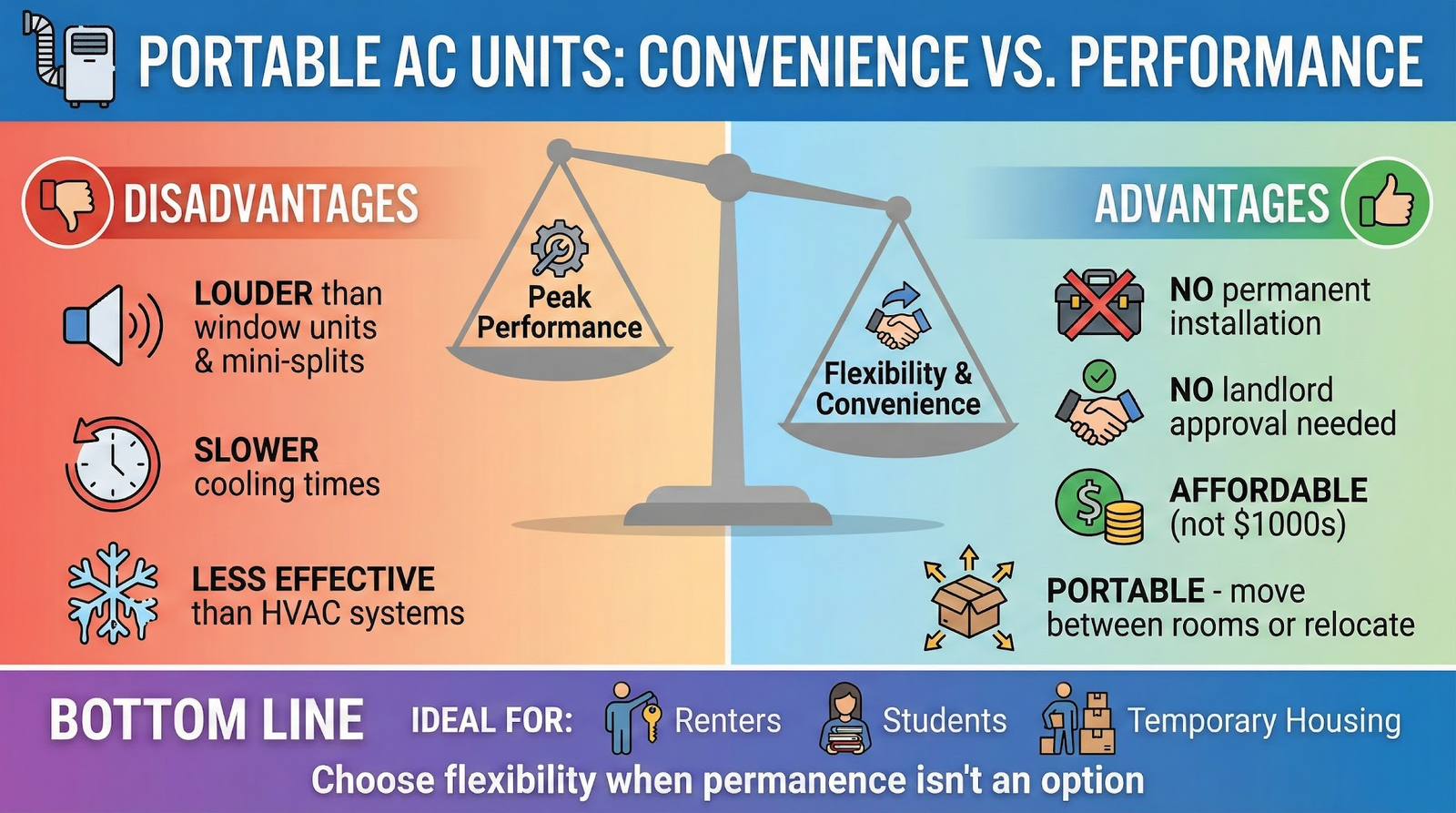
Advantages
-
No permanent installation
-
Renter-friendly design
-
Portable between rooms
-
Integrated dehumidifier
-
Straightforward setup
Trade-Offs
-
Louder than window units
-
Slower cooling response
-
Lower efficiency than fixed systems
For a broader comparison across models, see our TOSOT air conditioner brand review.
The Bottom Line
The TOSOT 12,000 BTU portable air conditioner with dehumidifier is designed for people who need cooling without permanent installation. It delivers realistic cooling performance for medium-sized rooms, handles humidity well, and installs quickly without violating lease agreements.
It won’t replace central air or outperform a built-in system, but that’s not its purpose. For renters, students, and anyone in temporary housing, it offers a practical balance between cooling power and flexibility.