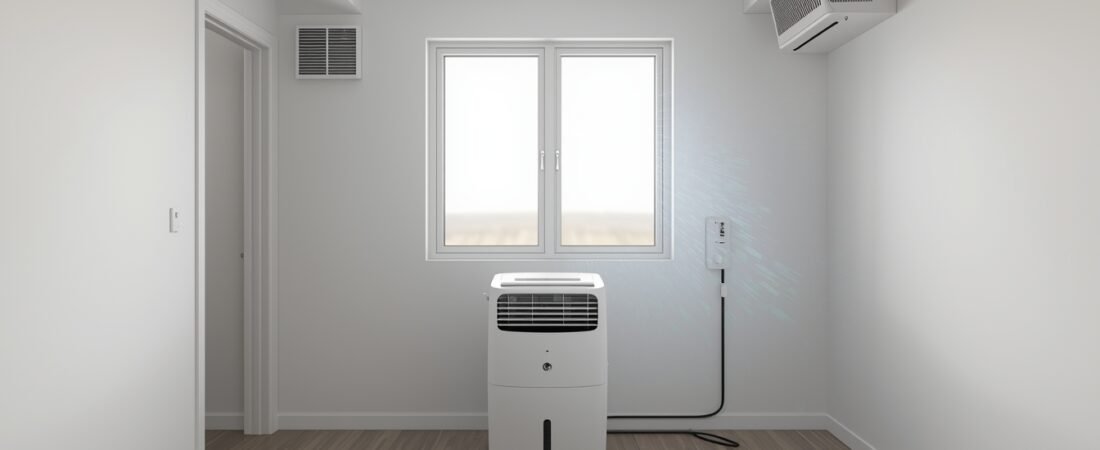
Many people search for a portable air conditioner that does not need a traditional window because they are dealing with interior rooms, sliding doors, unusual layouts, or rental restrictions. The key thing to understand is that most true portable air conditioners still need to vent somewhere. What changes is not whether venting is needed, but what kind of venting setup can work. This guide explains what to look for and which features matter most when shopping for a portable AC for a room without a standard window.
What “without a window” really means
In practice, this usually means without a standard up-and-down window kit. The unit still needs to expel heat somewhere. That could be through a sliding door, wall vent, or other adapted exhaust route. A common issue is confusing portable air conditioners with evaporative coolers marketed as no-vent options.
Features that matter most
Flexible exhaust options, manageable hose length, practical size, and room-appropriate cooling capacity matter more than flashy extras. In a small room, setup limitations usually matter just as much as cooling capacity. Many people find that a compact, easy-to-place unit is more useful than a larger unit with awkward venting requirements.
Who these units are best for
This type of setup is most useful for renters, studio apartment users, home offices, and bedrooms where a standard window kit is not realistic. In most homes, it is less about finding a magic no-window unit and more about finding a unit that works with a different exhaust method.
What to avoid when shopping
Be cautious with products described in ways that imply no exhaust is needed. True air conditioning requires heat removal. If the product only circulates or lightly cools air without exhaust, it will not perform like a real portable AC.
How to narrow the choice
Start with room size, then check what exhaust option is actually possible. From there, look for practical features such as manageable weight, simple controls, and a shape that fits the room layout.
Bottom line
For most small-room buyers, the best result comes from matching the unit and setup to the real room conditions rather than relying on a single spec or marketing claim. A common issue is treating all small rooms as identical. They are not. When the room size, heat load, and venting setup are all considered together, portable air conditioner decisions become much easier and much more practical.