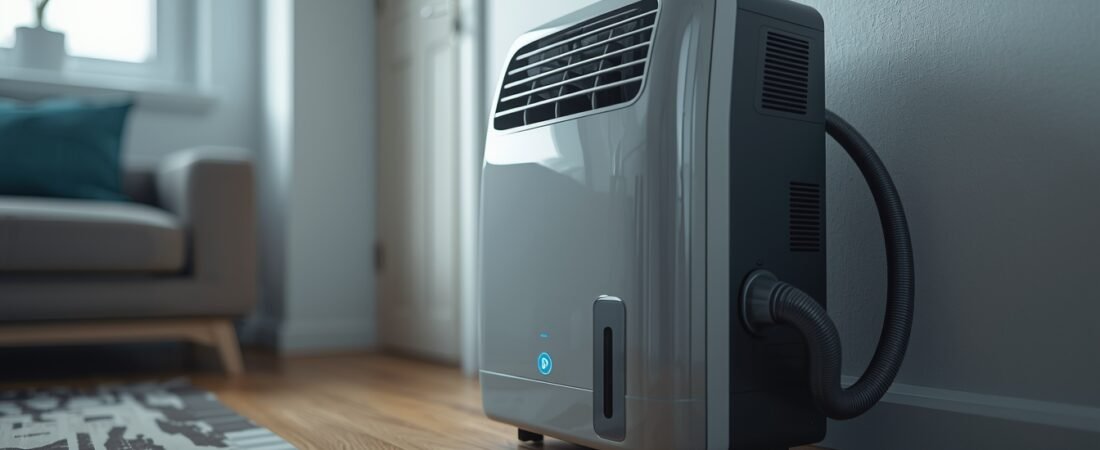
Humidity changes the way a small room feels. Many people assume that a damp room needs air conditioning, while others assume a dehumidifier will solve everything. In reality, the better option depends on whether the main problem is moisture, heat, or both at the same time. This guide explains how dehumidifiers and portable air conditioners differ, what each device actually does, and when one is more useful than the other in a small room or apartment setting.
What a dehumidifier is designed to do
A dehumidifier pulls moisture from the air and collects or drains that water away. The goal is to reduce dampness, improve comfort, and help prevent musty conditions. In most homes, a dehumidifier works best when the room feels sticky but not especially hot. It can make the air feel lighter, but it does not provide direct cooling.
What a portable air conditioner is designed to do
A portable air conditioner lowers room temperature by removing heat and exhausting it outside. During that process, it also removes some moisture from the air. That means a portable AC addresses both heat and humidity at the same time, which is why it tends to be more useful during hot weather.
When humidity is the main problem
If the room is damp because of weather, poor ventilation, or moisture buildup, but the temperature is manageable, a dehumidifier may be the better choice. This typically happens in basements, storage rooms, or cool but humid apartments. The main benefit is comfort improvement without running a cooling system unnecessarily.
When heat and humidity arrive together
If the room feels hot and sticky, a portable air conditioner is usually the better solution. Many people find that a dehumidifier alone does not go far enough in those conditions. A portable AC can lower temperature while also removing some moisture, making the space feel noticeably more comfortable.
How to decide between them
The simplest way to choose is to identify the real problem. If the space is mainly damp, start with moisture control. If the room is hot and uncomfortable, cooling usually matters more. In especially humid climates, some people use both at different times of year depending on conditions.
Bottom line
For most small-room buyers, the best result comes from matching the unit and setup to the real room conditions rather than relying on a single spec or marketing claim. A common issue is treating all small rooms as identical. They are not. When the room size, heat load, and venting setup are all considered together, portable air conditioner decisions become much easier and much more practical.