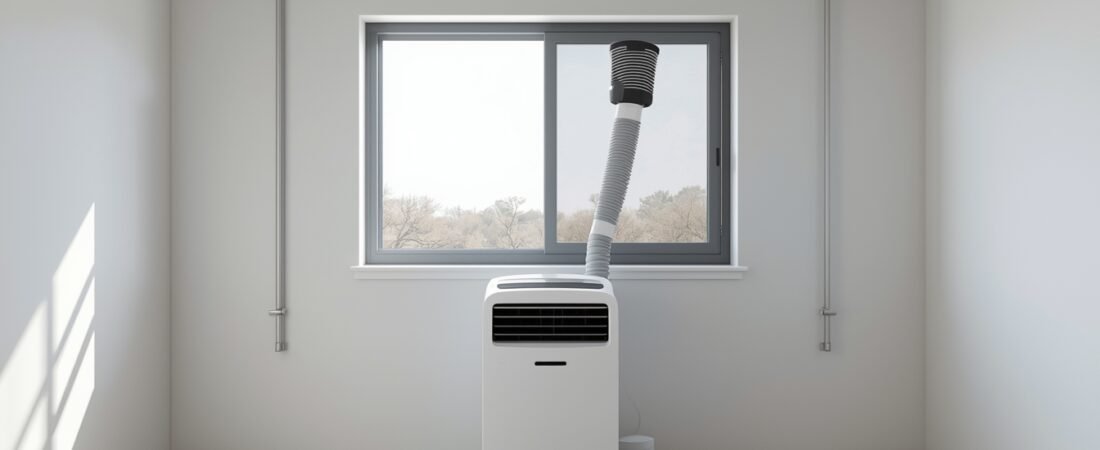
Venting a portable air conditioner without a standard window is one of the most common setup problems in small apartments and unusual room layouts. The good news is that a standard window is not the only option. The important part is giving the unit a reliable way to expel hot air outside the cooled space. This guide walks through the most practical approaches, explains what to watch out for, and helps you avoid setups that reduce cooling performance or create more heat indoors.
Why proper venting matters
A portable air conditioner works by removing heat from the room and sending that heat out through the exhaust hose. If that hot air is not moved outside the cooled space, the unit cannot work properly. This typically happens when people try improvised setups that leave the exhaust indoors or only partially sealed.
Using a sliding door
Sliding doors are one of the easiest alternatives because a vent panel can often be adapted vertically. This is common in apartments and studio layouts. The main challenge is sealing the remaining gaps so hot air does not leak back into the room.
Using a wall vent
A wall vent is a more permanent solution and often one of the cleanest if modifications are allowed. It can make the setup look neater and may improve efficiency because the exhaust route is stable and secure. However, it is usually less practical for short-term renters.
Temporary and adaptable setups
Some people use custom inserts, removable boards, or adapted panels for unusual openings. These can work, but the seal quality matters a great deal. In most homes, poor sealing is one of the biggest reasons portable AC performance falls short.
Common mistakes to avoid
Avoid exhaust hoses that are too long, sharply bent, or routed in ways that keep hot air inside the living space. Many people also overlook the amount of warm air that can leak back into the room through poorly sealed edges around the vent path.
Bottom line
For most small-room buyers, the best result comes from matching the unit and setup to the real room conditions rather than relying on a single spec or marketing claim. A common issue is treating all small rooms as identical. They are not. When the room size, heat load, and venting setup are all considered together, portable air conditioner decisions become much easier and much more practical.