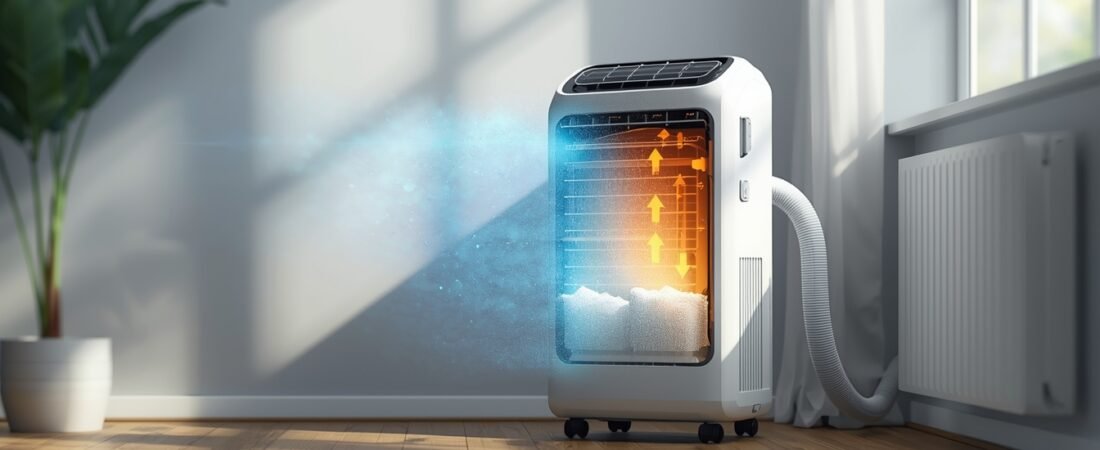
In most homes, a portable air conditioner is used as a flexible way to cool a single room without installing a permanent system. A common issue is not fully understanding how these units actually work, which often leads to unrealistic expectations or setup problems.
Many people find that once they understand the basics, performance and results make much more sense. This typically happens when you see how the unit removes heat from the room and why proper setup is essential for it to work effectively.
What a Portable Air Conditioner Does
In simple terms, a portable air conditioner removes heat from a room and pushes it outside.
A common issue is thinking that the unit creates cold air. Many people find it helpful to understand that it actually works by removing heat rather than producing cold.
This typically happens through a process where:
- Warm air is pulled into the unit
- Heat is extracted from that air
- The cooled air is sent back into the room
- The removed heat is vented outside
This cycle continues until the room reaches the desired temperature.
Why Venting Is Required
One of the most important parts of how a portable AC works is venting.
A common issue is trying to use the unit without proper ventilation. Many people find that performance drops significantly when hot air is not expelled outside.
This typically happens because the unit needs a way to remove the heat it extracts. Without venting, the heat stays in the room and cancels out the cooling effect.
If you’re unsure about setup, it helps to read can a portable air conditioner be used without a window to understand why venting is necessary.
Main Components of a Portable AC
- Compressor that removes heat from the air
- Evaporator coil that cools the air
- Exhaust hose that vents hot air outside
- Fan that circulates air through the room
- Water collection system for condensation
These components work together to remove both heat and moisture from the air.
Single Hose vs Dual Hose Systems
Portable air conditioners come in different designs, which affect how efficiently they work.
A common issue is not understanding the difference between single hose and dual hose units. Many people find that performance varies depending on the system type.
This typically happens because:
- Single hose units use room air to cool and vent heat
- Dual hose units bring in outside air and exhaust heat more efficiently
Dual hose systems are often more efficient, especially in warmer conditions, but both types can work well when used correctly.
Do Portable Air Conditioners Actually Work?
In most homes, portable air conditioners work well when matched to the right conditions.
A common issue is expecting them to perform like central air systems. Many people find that they are most effective in smaller, enclosed spaces.
If you want a clear breakdown of real-world performance, see do portable air conditioners actually work in small rooms to understand what to expect.
What Affects Performance
- Room size and ceiling height
- Amount of sunlight entering the room
- Quality of insulation
- Venting setup and installation
- Airflow around the unit
These factors determine how efficiently the unit can cool the space.
Why Portable AC Units Sometimes Struggle
Even when the unit is working correctly, performance can vary.
A common issue is poor cooling due to setup or environmental factors. Many people find that small changes can significantly improve results.
This typically happens when:
- The unit is undersized for the room
- Hot air leaks back inside
- Airflow is restricted
- Heat load is too high
If your unit is not performing as expected, it’s worth reviewing why your portable air conditioner is not cooling properly to identify common causes.
What Portable Air Conditioners Are Best For
- Cooling small rooms like bedrooms or offices
- Temporary or rental setups
- Spaces where permanent installation is not possible
- Targeted cooling in specific areas
- Supplementing existing cooling systems
In these situations, many people find that portable AC units provide a practical and effective solution.
When They May Not Be Ideal
- Large open spaces
- Rooms with heavy sun exposure
- Whole-house cooling needs
- Poorly insulated environments
- Situations requiring silent operation
In most homes, understanding these limitations helps avoid disappointment and ensures better results.
Choosing the Right Unit
Selecting the right portable air conditioner is essential for good performance.
A common issue is choosing a unit based on price rather than suitability. Many people find that sizing is the most important factor.
If you’re unsure what size is right for your room, see how many BTUs do I need for a portable air conditioner for a simple sizing guide.
Final Thoughts
In most homes, portable air conditioners are an effective and flexible way to cool individual rooms. A common issue is misunderstanding how they work, which can lead to poor setup or unrealistic expectations.
Many people find that once they understand the role of venting, sizing, and room conditions, the unit performs much better. This typically leads to more consistent cooling and a more comfortable space.
By focusing on proper setup and choosing the right unit, you can get reliable performance from a portable air conditioner without needing a permanent system.