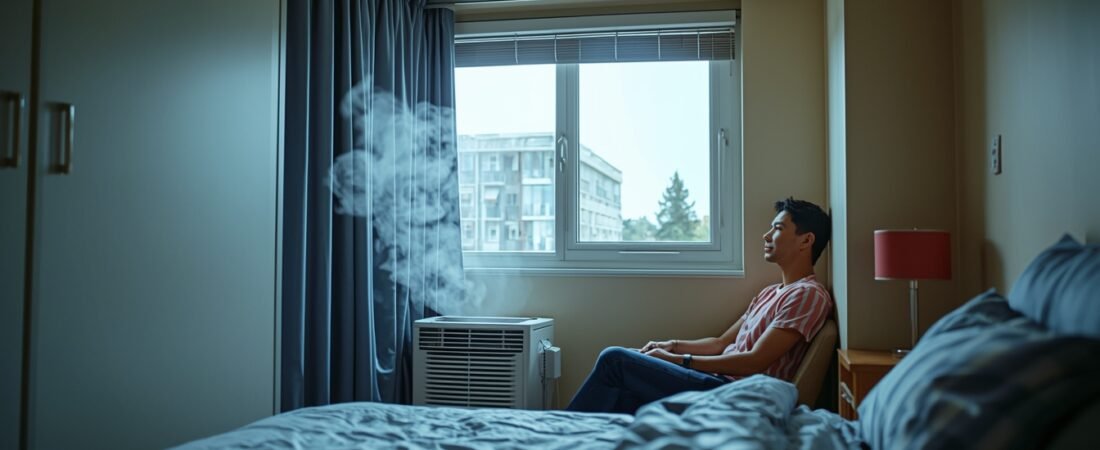
In most homes, a portable air conditioner is expected to cool a small room quickly and efficiently. A common issue is when the unit is running, but the room still feels warm or only slightly cooler than before. Many people find this frustrating, especially during hot weather when the unit should be performing at its best.
This typically happens when something in the setup, environment, or usage is limiting the unit’s ability to remove heat effectively. In many cases, the problem is not a fault but a mismatch between expectations and real-world conditions.
Signs Your Portable AC Is Not Cooling Properly
- The unit is running but the room temperature barely drops
- Air coming from the unit feels weak or not very cold
- The room cools very slowly or not at all
- The unit runs constantly without reaching the set temperature
- Cooling improves only when standing directly in front of the airflow
These signs usually point to airflow, sizing, or environmental issues rather than a complete failure.
Incorrect BTU Size for the Room
In most homes, one of the most common reasons for poor cooling is choosing the wrong size unit.
A common issue is using a unit with too few BTUs for the room. Many people find that the AC runs continuously but cannot reduce the temperature effectively. This typically happens because the unit does not have enough cooling capacity to handle the space.
If you are unsure whether your unit is correctly sized, it helps to review how many BTUs do I need for a portable air conditioner to match your room size and conditions.
Poor Venting or Window Setup
Portable air conditioners rely on proper venting to remove hot air from the room.
A common issue is incorrect or inefficient venting. Many people find that the unit struggles when hot air is not fully expelled outside.
This typically happens when:
- The exhaust hose is too long or kinked
- The window seal is not tight
- Hot air leaks back into the room
If your setup is not ideal, performance can drop significantly even with a properly sized unit.
High Heat Load in the Room
In many cases, the room itself is working against the air conditioner.
A common issue is excess heat from sunlight, electronics, or poor insulation. Many people find that rooms with large windows or direct sun exposure are harder to cool.
This typically happens when:
- Sunlight heats the room throughout the day
- Appliances add extra heat
- Insulation is poor
Even a correctly sized unit may struggle in these conditions.
What Affects Cooling Performance
- Room size and ceiling height
- Direct sunlight exposure
- Number of people in the room
- Heat from electronics or appliances
- Quality of insulation
These factors determine how hard the unit needs to work to maintain a comfortable temperature.
Airflow Restrictions
Another common issue is restricted airflow.
Many people find that placing the unit too close to walls or furniture reduces performance. This typically happens because the AC cannot circulate cool air properly.
Blocked filters can also reduce airflow, making the unit less effective.
Water and Humidity Issues
Portable air conditioners also remove moisture from the air.
A common issue is high humidity affecting performance. Many people find that cooling feels weaker in humid environments.
This typically happens because the unit is working to remove both heat and moisture at the same time.
If you’re unsure how humidity impacts performance, it helps to read do portable air conditioners work in high humidity for a clearer explanation.
When It Might Be a Real Problem
While most cooling issues are related to setup or conditions, there are cases where the unit itself may not be working properly.
A common issue is internal faults or wear. Many people find that cooling performance drops over time.
This typically happens when:
- The compressor is failing
- Refrigerant levels are low
- Internal components are worn
If the unit shows no improvement after checking setup and conditions, repair or replacement may be needed.
Quick Ways to Improve Cooling
- Ensure the exhaust hose is short and properly connected
- Seal the window kit to prevent hot air leaks
- Reduce sunlight with curtains or blinds
- Clean or replace air filters regularly
- Match the unit size to the room
These steps often improve performance without needing a new unit.
Are Portable ACs the Right Solution?
In most homes, portable air conditioners work well when used in the right conditions.
A common issue is expecting them to perform like built-in systems. Many people find that understanding their limits helps set realistic expectations.
If you are unsure whether this type of unit suits your needs, it helps to review do portable air conditioners actually work in small rooms to understand real-world performance.
Final Thoughts
In most homes, a portable air conditioner not cooling properly is usually caused by setup, sizing, or environmental factors rather than a fault. A common issue is expecting more from the unit than it is designed to deliver.
Many people find that once these factors are adjusted, performance improves significantly. This typically leads to better cooling, lower frustration, and a more comfortable space.
By focusing on airflow, sizing, and proper setup, you can get the best possible performance from your portable air conditioner.
If you want to understand how these units work, see what is a portable air conditioner and how does it work
Related Guides
Can a Portable Air Conditioner Be Used Without a Window?
How to Choose the Right Size Portable AC for Your Room
Best Portable Air Conditioners for Small Spaces, Apartments, and Dorms